By Rahul Dhakate · PMP & PSM I Certified · learnxyz.in
The PMI audit is one of the most anxiety-producing words in the PMP application process. Candidates who have spent weeks carefully documenting their project experience suddenly worry that everything will be scrutinised and found wanting. Most of that anxiety is disproportionate to the reality of what the audit actually involves — but it is understandable, because PMI does not explain the process particularly clearly before you go through it.
I was not audited when I applied for the PMP. My application was approved without triggering the audit process. So what follows is not a first-hand account of being audited — it is what PMI’s process requires and how I prepared in case I was selected. The audit is a standard part of PMI’s quality assurance, and understanding it fully before you apply removes an unnecessary source of stress from an already demanding process.
What the PMI Audit Actually Is
The PMI audit is a random verification process. PMI selects a percentage of PMP applications for additional verification — it is not triggered by anything suspicious in your specific application. If you are selected, you are not being accused of anything. You are simply one of the randomly chosen candidates who must provide supporting documentation for what you submitted.
The audit requires you to provide proof of the claims in your application:
- Education — a copy of your degree or diploma certificate
- Project management experience — confirmation from supervisors, managers or clients who can verify the project details you described
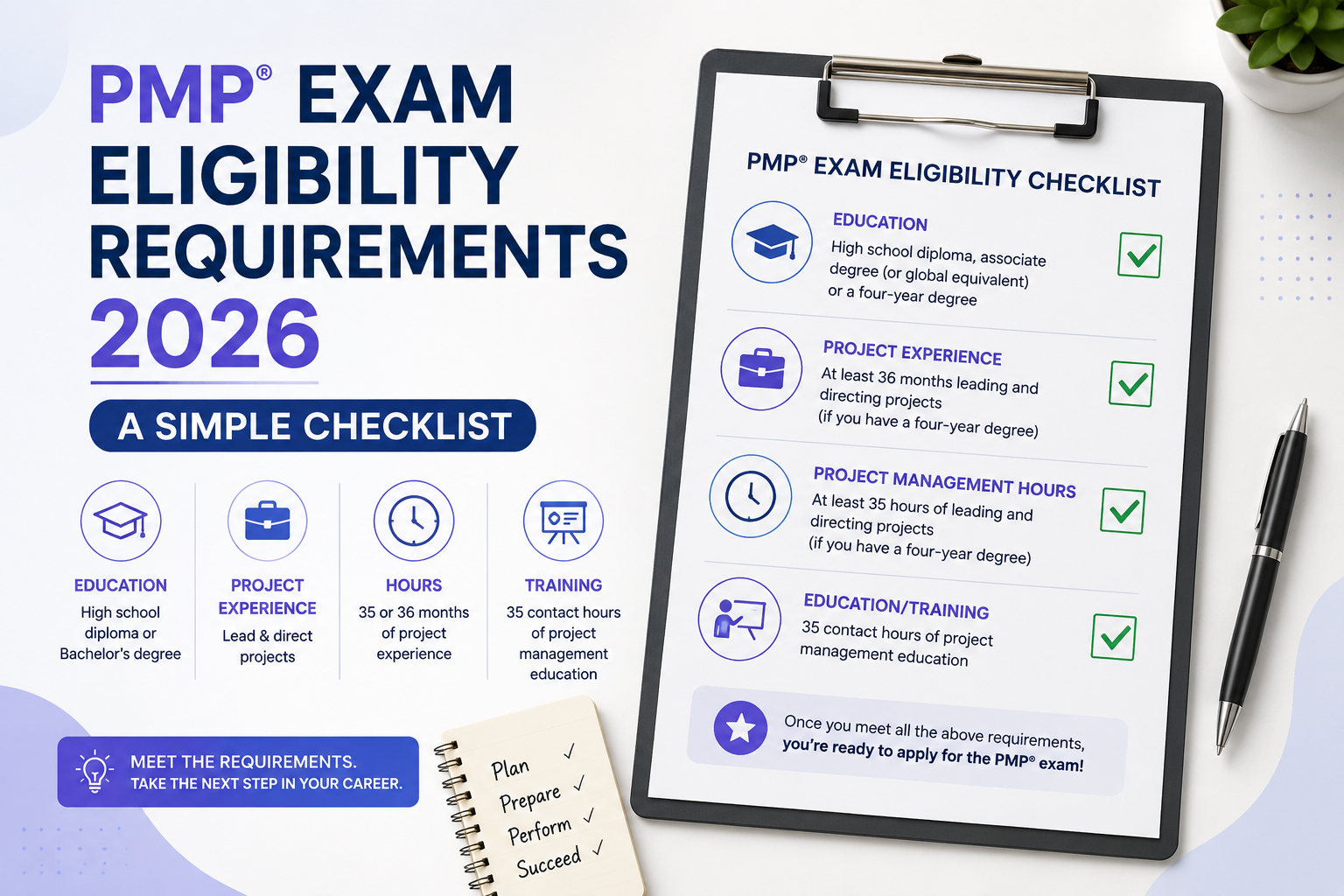
- 35 hours of project management training — a certificate of completion from your training provider
How Common is the Audit?
PMI does not publish the percentage of applications that are audited. You will see figures quoted in candidate communities, but they are estimates and they vary widely, so treat any specific number as a guess. What matters practically is that a minority of applicants are selected, and that you cannot predict or avoid selection.
The best approach is to apply honestly, document your experience accurately, and keep your supporting materials ready regardless of whether you expect to be audited. If you are still drafting the application, my guides on how to apply for the PMP exam and how to write your experience descriptions cover that part in detail.
I was not audited when I applied. But I had kept my materials organised — my Vinsys IT Services training certificate, my project documentation, and contact details for managers who could verify my experience descriptions. If you apply with accurate information and keep your documentation, the audit is a straightforward administrative process rather than a threat.
The Audit Timeline
| Stage | What Happens | Timeframe |
|---|---|---|
| Application submitted | PMI reviews your application for completeness | Usually about five business days |
| Audit notification (if selected) | PMI emails you that your application has been selected for audit | By email, once your application has been accepted and you have paid the exam fee |
| Documentation collection | You gather and submit your supporting documents | Up to 90 days from notification |
| PMI verification | PMI reviews what you submitted | Typically around a week once everything is received |
| Audit cleared | Your one-year eligibility period starts and you can schedule the exam | On completion of the review |
| Audit not passed | Documentation does not support the application | Rare when the application was accurate |
Timeframes are PMI’s typical processing times, not guarantees. Check the dates shown in your own PMI account.
What Documentation You Need Ready — Before You Apply
The most important audit preparation happens before you submit your application, not after you receive an audit notification. Here is what to have ready.
1. Education Certificate
A copy of your highest educational qualification — degree certificate, diploma, or equivalent. Scan it and save it in a format you can upload easily. If your certificate is in a language other than English, have a translation ready.
2. 35 Hours Training Certificate
The certificate of completion from your project management training. If you completed classroom training like I did through Vinsys IT Services, you should have received a certificate on completion. If you completed an online course, download and save your certificate immediately — do not assume you can retrieve it later.
3. Experience Verification
For each project listed in your application, PMI may ask a supervisor, manager or client to confirm the project details. This is the part that trips up candidates who have listed projects from years ago with managers they have lost contact with.
Before submitting your application, identify one verifiable contact for each project you plan to list. Check that you have a working email address or phone number for them. If a manager has moved on from an organisation, try LinkedIn. If you genuinely cannot locate a verifier for a project, consider whether to include that project at all — and check the current PMP eligibility requirements to see whether you still qualify without it.
The single most practical audit preparation: as soon as you submit your application, email each person you have listed as a potential verifier. Tell them briefly that you have applied for the PMP and that PMI may ask them to verify your project experience. This prevents confusion and delays if the audit arrives weeks later when people have forgotten the context.
If You Are Selected for Audit — Step by Step
- Read the audit notification email carefully. It specifies exactly which documents are required and the deadline for submission. You have up to 90 days. Do not panic.
- Gather all required documents — degree certificate, 35-hour training certificate, and the experience verification forms PMI provides.
- Contact your experience verifiers. Send each one the PMI verification request for their project. Explain what is needed and the timeline. Follow up once if you do not hear back within a week.
- Submit everything through PMI’s online portal before the deadline. Follow the submission instructions in your audit email exactly.
- Confirm receipt. Once submitted, check your PMI account to verify the documents have been received and are under review.
Common Audit Mistakes to Avoid
- Listing project experience you cannot verify — if you have genuinely lost contact with every possible verifier, the audit creates a problem that careful selection of projects would have prevented
- Exaggerating your role or hours — the verification is specifically checking whether what you described matches what your verifiers confirm. Minor differences in wording are normal. Fundamental differences between your described role and what the verifier remembers are a problem
- Missing the 90-day deadline — if you need more time because you cannot reach a verifier, contact PMI before the deadline expires and explain the situation
- Waiting to organise documents until after the notification — 90 days feels like a long time until you spend three weeks trying to track down a manager from 2019
Never submit a PMP application with inflated experience or a fabricated project in the hope of avoiding the audit. The audit exists precisely to catch this. Failing an audit can mean a suspension period before you may reapply, and providing false information can lead to a permanent ban from PMI certifications. The risk is not worth it — and for any candidate with genuine project management experience, it is also completely unnecessary.
If you are using AI to help draft the experience section, read how to use ChatGPT for your PMP application first — the descriptions must still be your own real experience, in words your verifiers would recognise.
About the author: Rahul Dhakate is a PMP and PSM I certified project manager based in Nagpur, India, with 20 years of experience managing software projects across BFSI, eCommerce and enterprise software. He applied for the PMP without being selected for audit, having completed his 35 hours through Vinsys IT Services classroom training and kept accurate project documentation throughout his application. He writes at LearnXYZ.in to help working professionals pass the PMP exam on their first attempt.