By Rahul Dhakate · PMP & PSM I Certified · 9 August 2026 · learnxyz.in
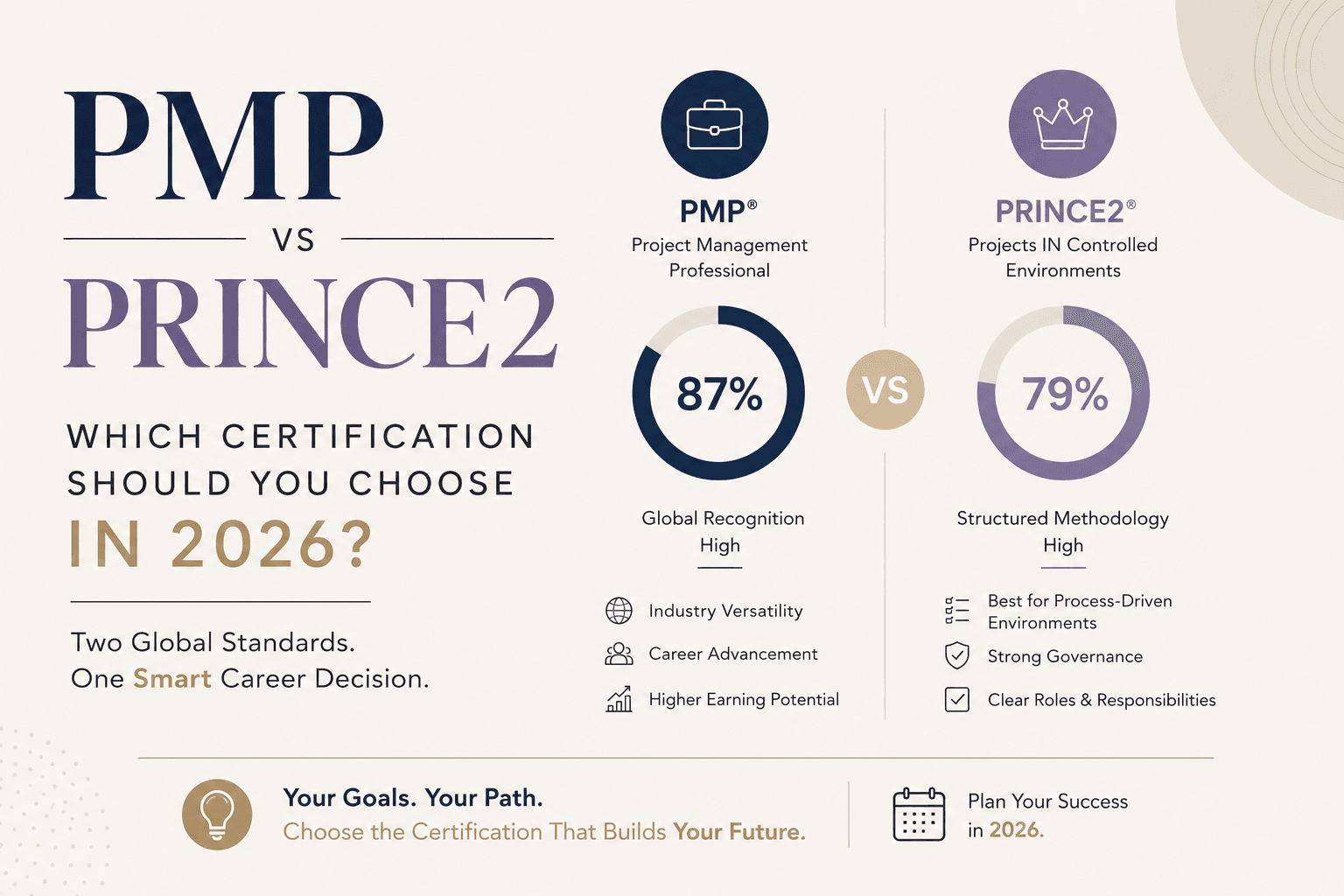
PMP and PRINCE2 are the two most globally recognised project management certifications. Most career comparisons between them present a clear winner. I want to give you a more nuanced answer — because the right choice depends heavily on where you work, where you want to work, and what kind of career growth you are targeting.
From observing career trajectories across my 20 years in software project management, I have seen people who hold both certifications achieve significant growth. PRINCE2 is not a consolation prize for people who could not get PMP. It is a genuinely strong credential — particularly in certain geographies and industries — and for the right person, holding both is a powerful combination.
Contents
PMP vs PRINCE2: Which Certification Should You Choose in 2026?.
Who Should Choose PRINCE2 — or Both.
What is PRINCE2?
PRINCE2 (Projects IN Controlled Environments) is a structured project management methodology developed by the UK government and now maintained by Axelos. Unlike PMP, which is primarily a competency-based certification testing your ability to apply project management judgment, PRINCE2 is a prescriptive methodology — it defines specific processes, roles, themes, and principles that must be followed on a project.
PRINCE2 comes in two levels: Foundation (knowledge of the methodology) and Practitioner (ability to apply it). The Practitioner level is the one that carries weight in hiring decisions.
Core Differences
| Factor | PMP | PRINCE2 |
| Issuing body | PMI (Project Management Institute) — USA | Axelos — UK government origin |
| Methodology vs competency | Competency-based — tests judgment across any methodology | Prescriptive methodology — tests knowledge of PRINCE2 process |
| Experience required | 36-60 months project leadership experience required | No experience required for Foundation; experience recommended for Practitioner |
| Exam difficulty | High — scenario-based judgment under time pressure | Moderate Foundation; Practitioner is more challenging |
| Renewal | Every 3 years (60 PDUs) | Every 3 years (CPD points for Practitioner) |
| Primary geography | Dominant globally — especially US, Canada, Asia Pacific, India | Dominant UK, Europe, Australia, Middle East government projects |
| Industry strength | Strong across all industries — especially IT, BFSI, healthcare | Strong in government, public sector, UK-based multinationals |
| Salary premium (US) | 20-25% average premium | Lower US premium — less recognised by US employers |
| Salary premium (UK/Europe) | Strong | Strong — often preferred over PMP in UK public sector |
Who Should Choose PMP
PMP is the right primary certification for the majority of project management professionals globally, particularly those in:
- IT services, software development, and technology delivery
- BFSI (Banking, Financial Services, Insurance) — especially US and Asia-based clients
- Consulting and professional services targeting global clients
- Anyone targeting US remote roles or US-based employers
- Professionals in India targeting international career growth — PMP has far greater recognition with global clients than PRINCE2
Who Should Choose PRINCE2 — or Both
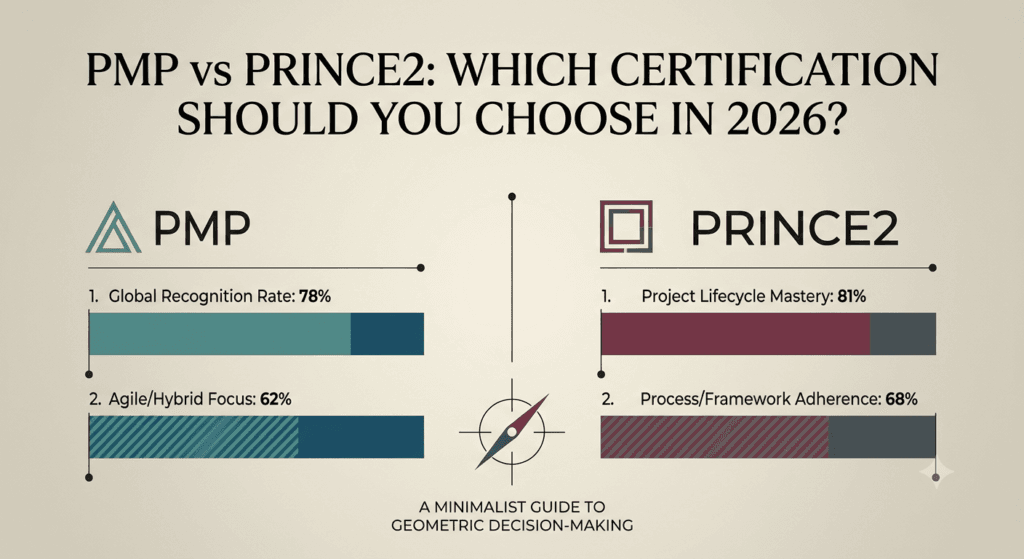
PRINCE2 is the right primary certification (or a strong complement to PMP) for:
- Project managers working in the UK, European Union, or Middle East government contracts
- Anyone working with UK-headquartered multinational clients who have standardised on PRINCE2
- Professionals targeting roles with organisations like UNDP, World Bank, or UK government agencies — where PRINCE2 Practitioner is frequently listed as a requirement
- Senior professionals who want the most comprehensive possible credential portfolio — holding both PMP and PRINCE2 Practitioner is a genuinely strong combination that signals both US and European market credibility
I have seen professionals who hold both PMP and PRINCE2 achieve significant career growth trajectories. The combination signals breadth — you understand both the competency-based PMI framework and the structured PRINCE2 methodology. For senior programme management and director-level roles in global organisations, this breadth is genuinely valued.
Should You Get Both?
The honest answer: if your budget and time allow it, yes — eventually. But sequence matters.
Get PMP first. It has broader global recognition and the experience requirement means you will be more prepared for both the exam and the real-world application by the time you qualify. Once PMP is secured and your PDU cycle is running, adding PRINCE2 Practitioner in year 2 or 3 of your cycle is a natural expansion that earns PDUs while broadening your credential profile.
PRINCE2 Foundation is considerably easier than PMP and can be completed in a few days of study. Do not use Foundation as your primary credential — it is entry-level. Practitioner is the level that carries weight, and that requires more preparation. If you add PRINCE2 to your PMP, go straight to Practitioner.
The Salary Reality in 2026
| Credential Combination | US Market | UK/Europe Market | India Market |
| PMP only | $115,000-140,000 | £55,000-75,000 | ₹18-35 LPA |
| PRINCE2 Practitioner only | $85,000-105,000 (less recognised) | £55,000-75,000 | ₹12-22 LPA |
| PMP + PRINCE2 Practitioner | $120,000-150,000+ | £65,000-90,000 | ₹22-40 LPA |
| PMP + PSM I (Scrum) | $120,000-155,000 | £60,000-85,000 | ₹20-38 LPA |
About the Author
Rahul Dhakate is a PMP and PSM I certified project manager and product management leader based in Nagpur, India, with 20 years of experience managing software projects across BFSI, eCommerce, and enterprise software. He holds PMP and PSM I certifications and has observed how different credential combinations affect career trajectories across 20 years in global software project management. He writes at LearnXYZ.in to help working professionals pass the PMP exam and build modern project management careers.
Next Article: How to Get PDUs for Free in 2026 — Complete Guide
Interesting Reads