By Rahul Dhakate · PMP & PSM I Certified · 16 August 2026 · learnxyz.in
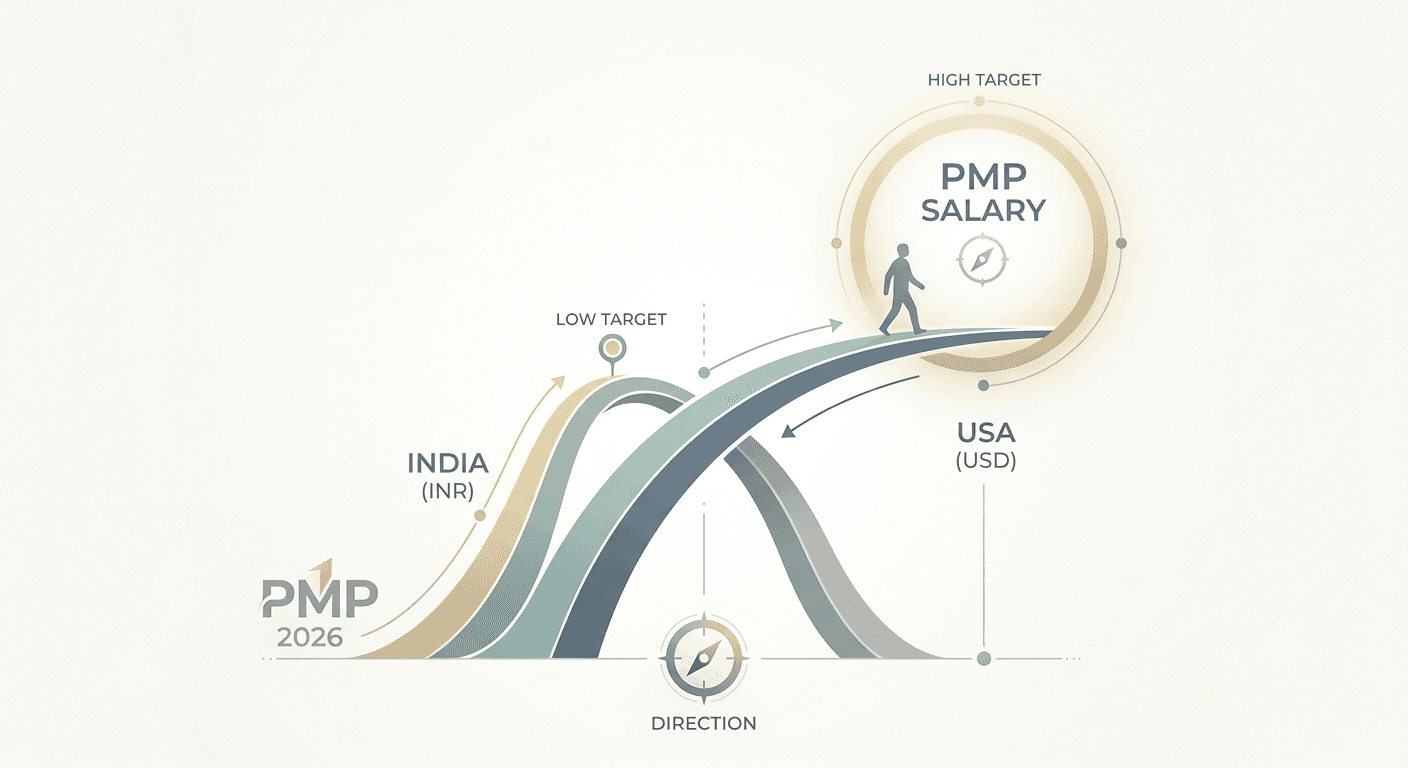
The PMP salary question is one that every candidate researches before investing time and money in the certification — and one that most comparison articles answer with optimistic averages that do not tell you the full picture.
I want to give you the honest version. Getting a PMP certification creates a genuine expectation of a salary hike — that expectation is reasonable and the data supports it. But whether that hike materialises, and how much it amounts to, depends on factors that the averages never capture: your current level, your industry, your negotiation approach, and critically, how you position the certification in a job change or internal review.
The honest truth about PMP and salary: the certification is a key that opens better doors. Once you walk through those doors, your salary depends entirely on your negotiations with HR. You must be worth the money you are asking for — and you must know how to ask for it. PMP gives you leverage. Using leverage is a separate skill.
Current Salary Data — What the Market Shows in 2026
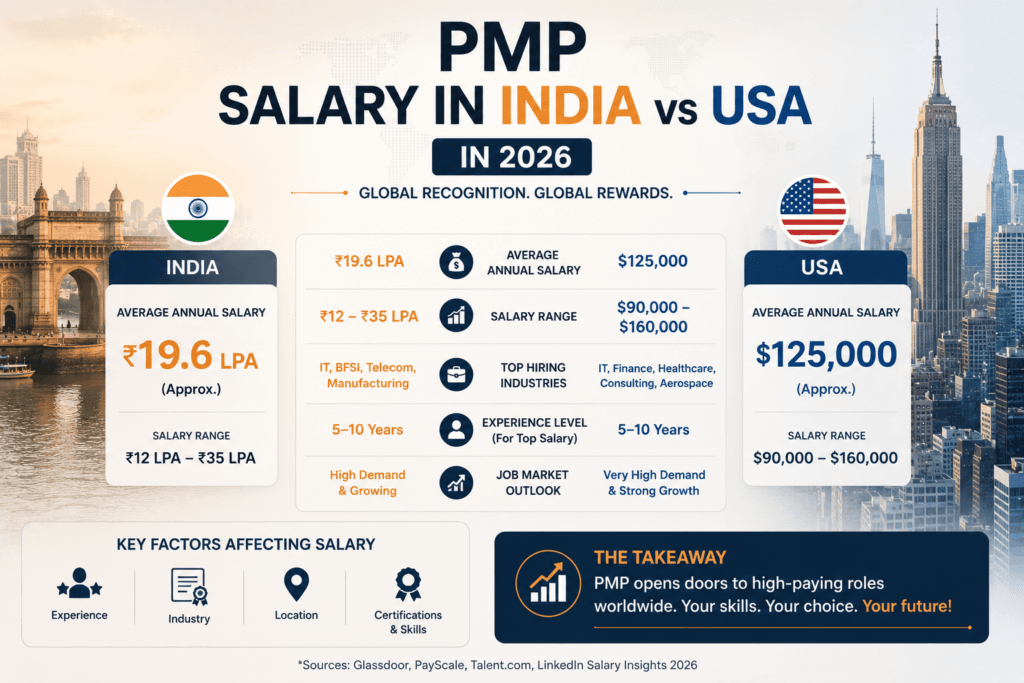
India Market
| Experience Level | Without PMP | With PMP | Premium |
| 3-5 years (Senior PM) | ₹8-14 LPA | ₹12-20 LPA | 25-40% |
| 5-10 years (Lead PM) | ₹14-22 LPA | ₹20-32 LPA | 25-45% |
| 10-15 years (Delivery Manager) | ₹22-35 LPA | ₹30-50 LPA | 20-40% |
| 15+ years (Programme Director) | ₹35-55 LPA | ₹45-75 LPA | 25-35% |
USA Market
| Experience Level | Without PMP | With PMP | Premium |
| 3-5 years (Senior PM) | $80,000-100,000 | $95,000-120,000 | 15-25% |
| 5-10 years (Lead PM) | $100,000-130,000 | $120,000-160,000 | 15-30% |
| 10-15 years (Programme Manager) | $130,000-160,000 | $155,000-200,000 | 15-25% |
| 15+ years (Director) | $160,000-210,000 | $190,000-250,000+ | 15-25% |
What the Numbers Don’t Tell You
These averages assume the certification is being actively used to negotiate a better position — either through an external job change or an internal promotion conversation. Simply holding PMP while staying in the same role with the same employer often produces a smaller or no immediate increase.
The three scenarios where PMP produces the biggest salary impact:
- Job change: Moving to a new employer with PMP on your resume, specifically targeting roles that list it as preferred or required. This is where the premium is most clearly realised — you are entering a new salary negotiation from a stronger position.
- Promotion conversation: Using the certification as part of a documented case for a role change or grade increase at your current employer. Most organisations have formal criteria for promotion levels — if PMP is listed as a requirement for a senior grade, you now meet it.
- Contracting or consulting: PMP-certified consultants command significantly higher day rates than non-certified peers with equivalent experience. The certification functions as a verified quality signal for clients who cannot directly assess your work history.
The Negotiation Reality — What You Must Know
Everything depends on how you target your interview and negotiate with HR. Getting a better package is often a mental game — you must believe you are worth the money you are asking for before you can convince anyone else.
The negotiation mistakes most PMP holders make when changing jobs:
- Accepting the first offer without countering — the first offer is a starting position, not a final number. Counter with a specific figure backed by market data.
- Not researching current market rates before the interview — if you do not know what the role pays in the current market, you cannot negotiate effectively. Use LinkedIn Salary, Glassdoor, and Naukri salary insights to establish your benchmark before any discussion.
- Underselling the certification — listing PMP on your resume is not enough. In the interview, explicitly connect the certification to the value you will deliver: how your PMP knowledge improves risk management, stakeholder communication, and delivery predictability.
- Focusing only on base salary — total compensation includes variable pay, learning allowances, remote work flexibility, and title. Sometimes a better title with slightly lower base creates more earning power in the next negotiation.
India-Specific Considerations in 2026
In the Indian market specifically, PMP is most consistently valued in IT services companies (Wipro, Infosys, TCS, HCL, Cognizant), BFSI clients, and US-headquartered Indian operations. The premium is strongest when you are targeting client-facing delivery or programme management roles — positions where the credential is visible to the client, not just to internal HR.
For professionals in Nagpur and tier-2 cities, remote work has significantly changed the salary equation. A PMP-certified PM in Nagpur targeting US-based remote roles can now realistically target US market salary ranges — something that was not practically available five years ago. This is the single biggest salary opportunity the combination of PMP and remote work has created.
The Non-Salary Benefits That Are Often More Valuable
My own experience after passing PMP: the benefit that materialised first was not an immediate salary increase — it was the removal of a ceiling. Certain roles, certain promotions, certain client-facing positions that had been out of reach because the credential was missing became accessible. The salary followed from those new positions, not directly from the credential.
This is the pattern I observe across most PMP holders: the certification unlocks access to roles and opportunities, and those roles deliver the compensation improvement. Expecting a salary increase in your current role without a position change is a less reliable outcome than using the credential to justify a move.
About the Author
Rahul Dhakate is a PMP and PSM I certified project manager and product management leader based in Nagpur, India, with 20 years of experience managing software projects across BFSI, eCommerce, and enterprise software. He earned his PMP certification after 20 years of software project management experience and found the credential’s primary value lay in unlocking career advancement opportunities rather than producing an immediate salary adjustment in his existing role. He writes at LearnXYZ.in to help working professionals pass the PMP exam and build modern project management careers.
Next Article: PMP CCR Guide 2026 — How to Renew Your PMP Without the Stress
Interesting Reads If you missed our previous articles: