
By Rahul Dhakate · PMP & PSM I Certified · 10 June 2026 · learnxyz.in
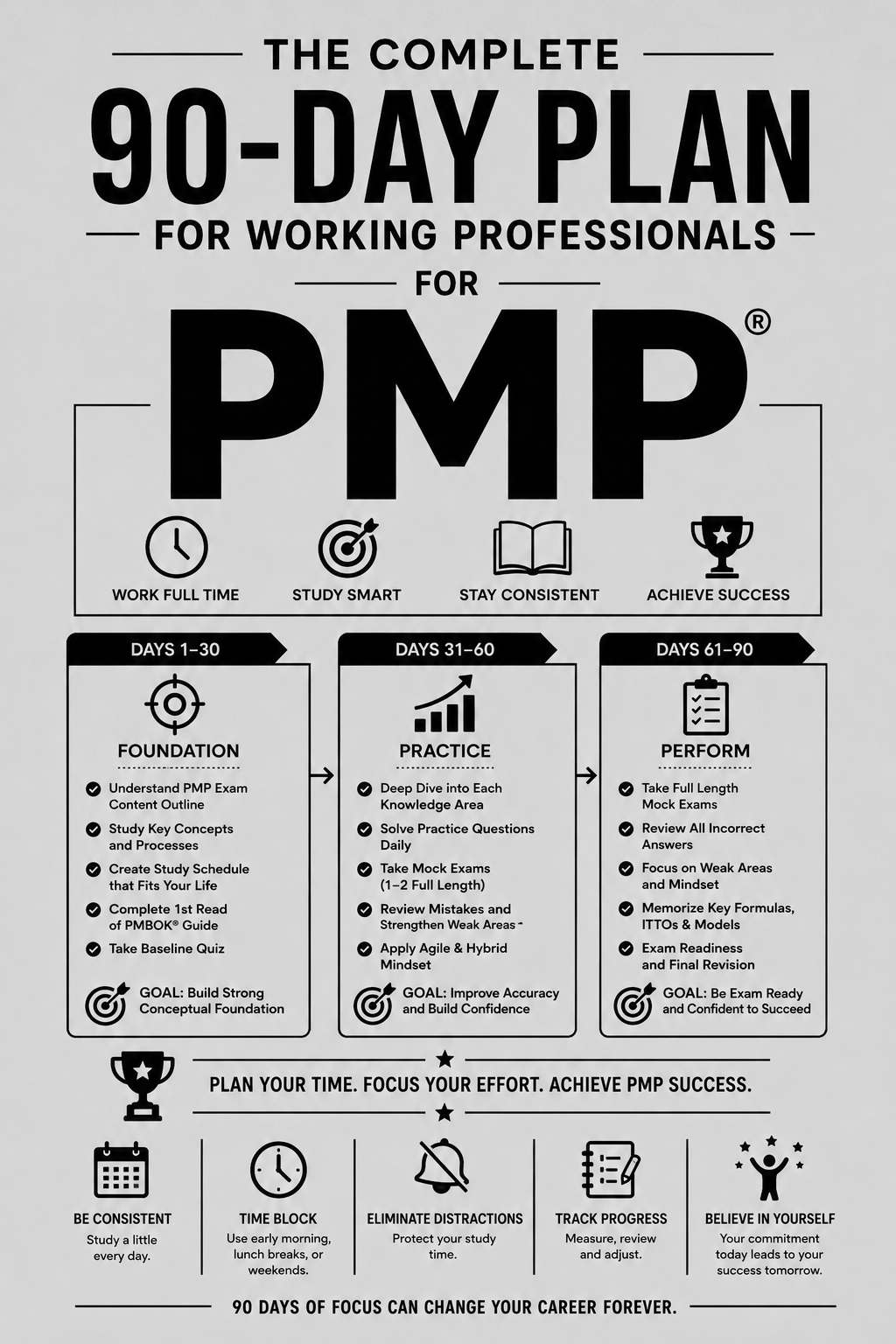
I want to start with something honest: you do not necessarily need 90 days of active study to pass the PMP exam. With consistent focused preparation, three weeks to a month of persistent daily study can be sufficient — if your foundation in project management is strong and you use the right materials.
However, for most working professionals who are studying part-time alongside a full-time job, 90 days is the realistic horizon. It gives you enough time to cover the material thoroughly without the unsustainable pressure of trying to compress everything into a few intense weeks. It also accommodates the inevitable disruptions — a demanding work week, a family event, a week where nothing goes to plan — without derailing your preparation entirely.
What I know from waiting almost a decade between my PMP training and finally sitting the exam: the cost of not being prepared is higher than the cost of being over-prepared. The PMP exam fee is not cheap. Failing and retaking adds significant cost. Study with the intention of passing first time — and give yourself the time to do that properly.
The PMP exam is not cheap. You must think in a positive way to clear the exam and not repeat it, as it will cost you additional money to reappear. Study with the explicit goal of passing on the first attempt. Budget the time accordingly.
Before You Begin: The Non-Negotiables
Before week one of your study schedule, complete these three actions:
- Book your exam date. Set it 90 days from now. This date is your anchor. Every study session is oriented toward it.
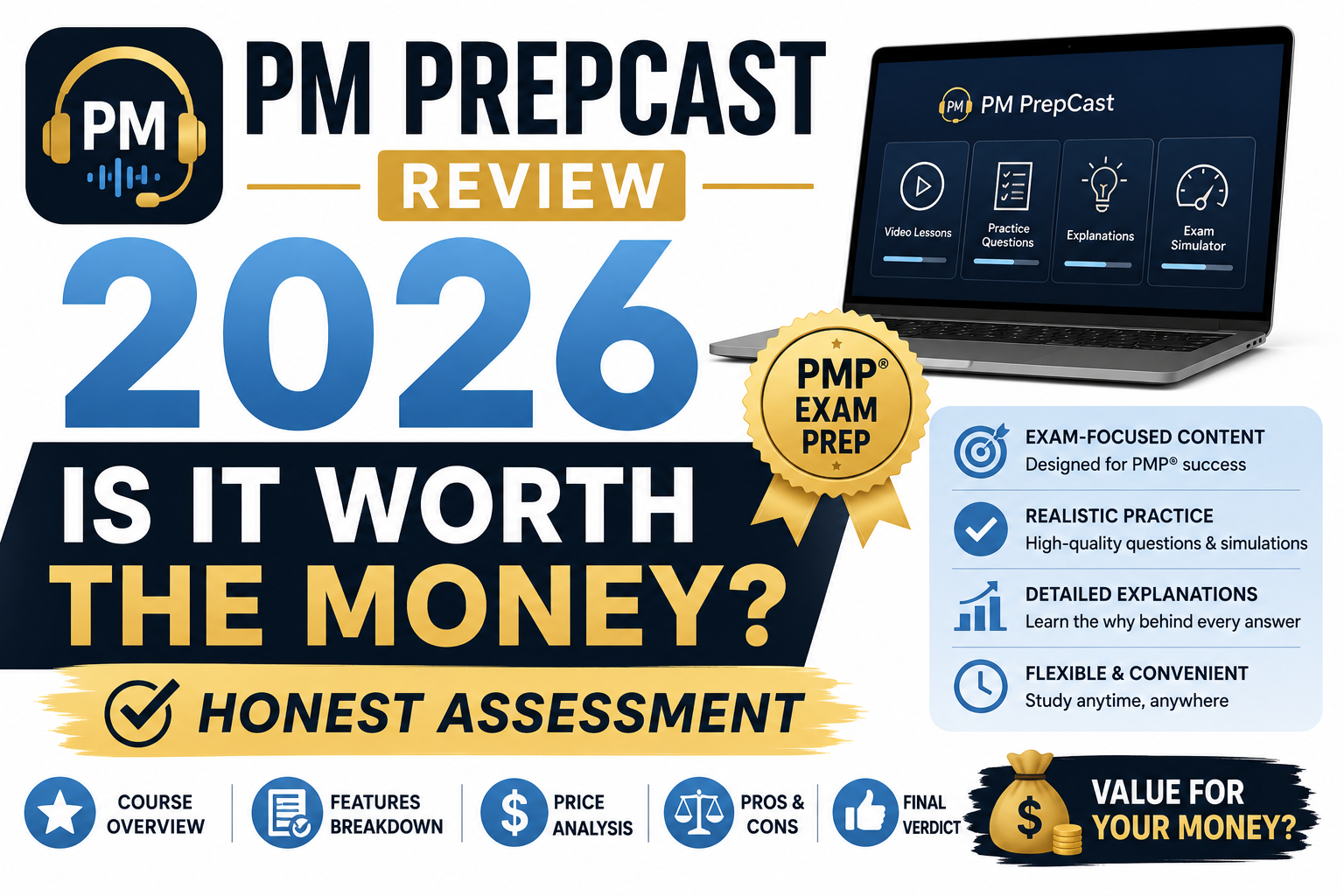
- Confirm your resources. You need: PMBOK Guide 7th Edition (free with PMI membership), Agile Practice Guide (free with PMI membership), one video course or prep book, and one practice exam simulator (PM PrepCast recommended).
- Set up your study space. A dedicated physical space — even a corner of a room with good light — signals to your brain that study time has begun. The formula-on-the-wall technique works best when you have one consistent place where you see it every day.
The 90-Day Plan: Week by Week
Phase 1: Foundation (Weeks 1-4)
Goal: Build your understanding of the PMP exam structure and the core predictive PM concepts.
| Week | Focus Area | Daily Study (Weekday) | Weekend Study | Milestone |
| Week 1 | PMP exam structure, eligibility, application process. Read PMBOK Guide introduction and principles overview. | 1.5 hours | 3 hours Saturday + 3 hours Sunday | 50 practice questions completed |
| Week 2 | Predictive PM: Project Charter, Scope Management, WBS. Begin Agile Practice Guide. | 1.5 hours | 3 hours Saturday + 3 hours Sunday | 100 practice questions total |
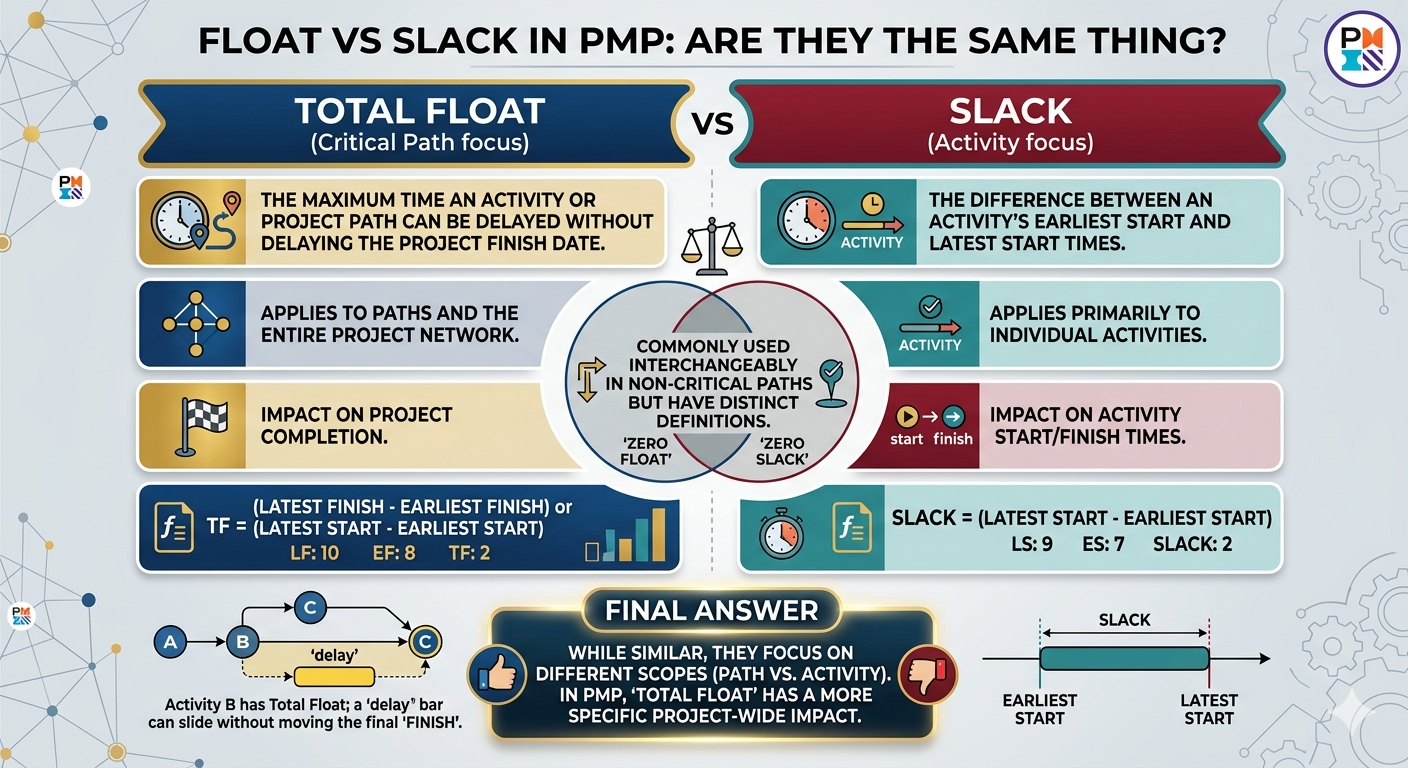
| Week 3 | Schedule Management (CPM, Float, Critical Path), Cost Management, EVM formulas. | 2 hours | 3.5 hours Saturday + 3.5 hours Sunday | EVM formula sheet memorised |
| Week 4 | Risk Management, Procurement Management, Quality Management. Continue Agile Practice Guide. | 2 hours | 3.5 hours Saturday + 3.5 hours Sunday | 200 practice questions total. First weak area review. |
Phase 2: Agile and Deep Practice (Weeks 5-8)
Goal: Build Agile knowledge and begin serious practice question volume.
| Week | Focus Area | Daily Study (Weekday) | Weekend Study | Milestone |
| Week 5 | Complete Agile Practice Guide. Scrum roles, ceremonies, artefacts in depth. Kanban basics. | 2 hours | 4 hours Saturday + 4 hours Sunday | Agile Practice Guide complete |
| Week 6 | Hybrid PM, SAFe fundamentals, Stakeholder and Communications Management. People domain focus. | 2 hours | 4 hours Saturday + 4 hours Sunday | 400 practice questions total |
| Week 7 | Situational questions intensive: PMI mindset, Agile scenarios, people domain scenarios. Review all wrong answers. | 2 hours | 4 hours Saturday + 4 hours Sunday | 600 practice questions total |
| Week 8 | First full mock exam (180 questions, timed). Thorough review of all wrong answers. Identify top 3 weak areas. | 2 hours | Full mock exam Saturday + 4 hours review Sunday | Mock exam score recorded. Weak areas identified. |
Phase 3: Consolidation and Exam Readiness (Weeks 9-12)
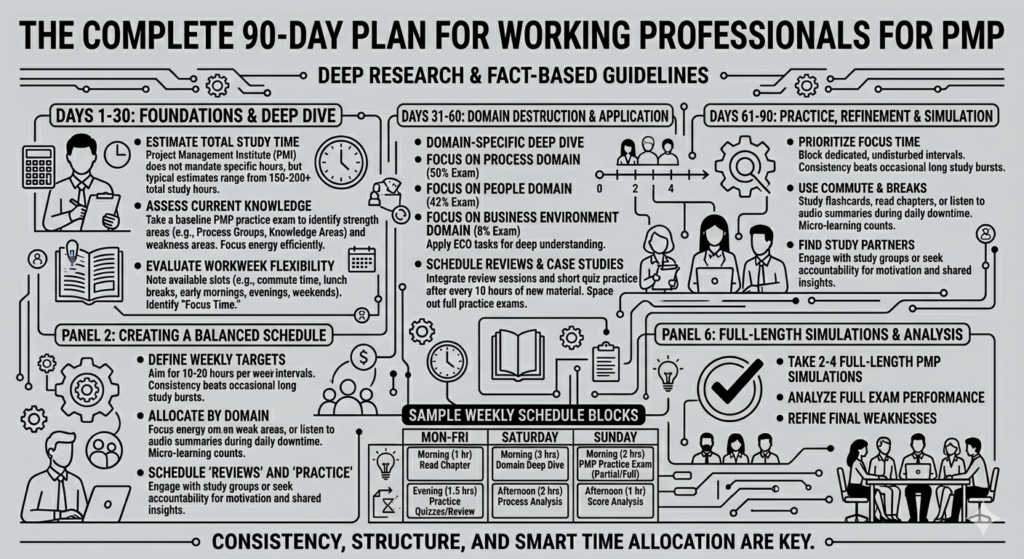
Goal: Consolidate knowledge, increase practice volume, and build exam-day confidence.
| Week | Focus Area | Daily Study (Weekday) | Weekend Study | Milestone |
| Week 9 | Deep revision of all weak areas identified in mock exam. Re-read relevant PMBOK sections. Formula intensive review. | 2 hours | 4 hours Saturday + 4 hours Sunday | 900 practice questions total |
| Week 10 | Second full mock exam (180 questions, timed). Review all wrong answers. Target 70%+ score. | 2 hours | Full mock exam Saturday + 4 hours review Sunday | Mock exam 2 score. Must hit 65%+ to stay on track. |
| Week 11 | Final revision of all domains. Agile scenario question intensive. Communications formula practice. Exam strategy review. | 2 hours | 3 hours Saturday + 3 hours Sunday | 1,200 practice questions total |
| Week 12 | Light review only — no new material. Exam logistics confirmed. Formula sheet final review. Rest and confidence building. | 45 minutes light review | Rest Saturday. Light review Sunday morning only. | EXAM THIS WEEK |
The Formula Wall — Your Secret Weapon
Here is the study technique I recommend above almost anything else for formula retention: write all the key PMP formulas on a single sheet of paper and stick it somewhere you see every day — on the bathroom mirror, above your desk, on the kitchen cabinet.
Spend 60 to 90 seconds every morning just reading through it. You are not studying in those 90 seconds. You are imbibing the formulas into your subconscious mind through daily repetition. After two weeks, you will find the formulas appearing in your memory automatically when you need them — without having drilled them deliberately.
This technique works because it uses spaced repetition in its simplest form. You see the formulas every day in a relaxed, low-pressure context. Your brain files them as important repeated information. By exam day, EV minus AC equals CV is not something you have to recall — it is something you simply know.
What to Do When the Plan Gets Disrupted
Your plan will be disrupted. Work will get demanding. Family will need you. A week will pass where you managed two study sessions instead of seven. This is not failure — it is the reality of being a working professional.
The rule for recovery: never miss two consecutive weeks. One disrupted week means you increase intensity the following week — an extra session on two evenings and a longer weekend block. One bad week followed by a recovery week keeps you on track. Two consecutive disrupted weeks requires you to assess whether your exam date needs to move.
The structured plan I described works if you follow it consistently — but it is designed to be overridden by life when necessary. What matters is the overall trajectory, not perfection at each weekly milestone.
About the Author:
Rahul Dhakate is a PMP and PSM I certified project manager and product management leader based in Nagpur, India, with 20 years of experience managing software projects across BFSI, eCommerce, and enterprise software. He ultimately studied for PMP in focused sessions of 2-3 hours per day after work, having waited nearly a decade after his initial training before finally committing to the exam — and passed on his first attempt. He writes at LearnXYZ.in to help working professionals pass the PMP exam and build modern project management careers.
Next Article:


You ought to be a part of a contest for one of the most useful websites online.
I most certainly will highly recommend this blog!