By Rahul Dhakate · PMP & PSM I Certified · 3 July 2026 · learnxyz.in
After covering books, video courses, Agile-specific training, free resources, and simulators individually across this series, this article answers the question every candidate actually wants answered directly: which one should I buy?
Here is my honest answer, and I want to be direct about it because it differs from what most monetised PMP sites will tell you: always start with the materials specified and provided by PMI itself, through your required 35-hour training. There is no single commercial course I can point to and say this is the one that guarantees success. The course is a tool. The guarantee, if there is one, comes from your own personal effort and engagement with the material.
There is no particular course I would universally recommend above all others. Success in the PMP exam requires your own personal effort — the course simply provides structure for that effort. Choose a credible source, then commit fully to using it.
The Honest Framework for Choosing
Rather than ranking courses as if one objectively beats the others, here is the decision framework that actually matters:
- Start with what PMI provides. Your required 35 contact hours of training already includes course materials. If that training is from a credible provider, you may already have everything you need.
- Identify your specific gap. After working through your primary materials and doing initial practice questions, you will know whether your gap is in Agile situational questions, EVM calculations, or general exam familiarity. Choose a supplementary course that targets your specific gap — not a generic one.
- Match the format to how you learn. If you retain through reading and re-reading, prioritise books and written materials. If you grasp concepts faster through visual explanation, prioritise video courses.
- Let your budget guide additional spend — not your anxiety. Spend more only when you are genuinely confident the additional resource addresses a real, identified gap. Buying multiple courses out of fear that you do not have enough is rarely the right use of money.
Does the Answer Change by Budget? Yes — But Carefully
The answer does change based on your available budget, but with an important caveat: you should expand your spending only when you are genuinely confident it will help, not simply because more expensive options exist.
| Budget Level | Recommended Approach | What to Prioritise |
| Minimal ($0-150) | PMI membership + required training materials only | PMBOK Guide, Agile Practice Guide, PMI sample questions, mentor-provided practice questions |
| Moderate ($150-300) | Add one targeted resource for your weakest area | PM PrepCast for general practice, or Andrew Ramdayal TIA for Agile gaps |
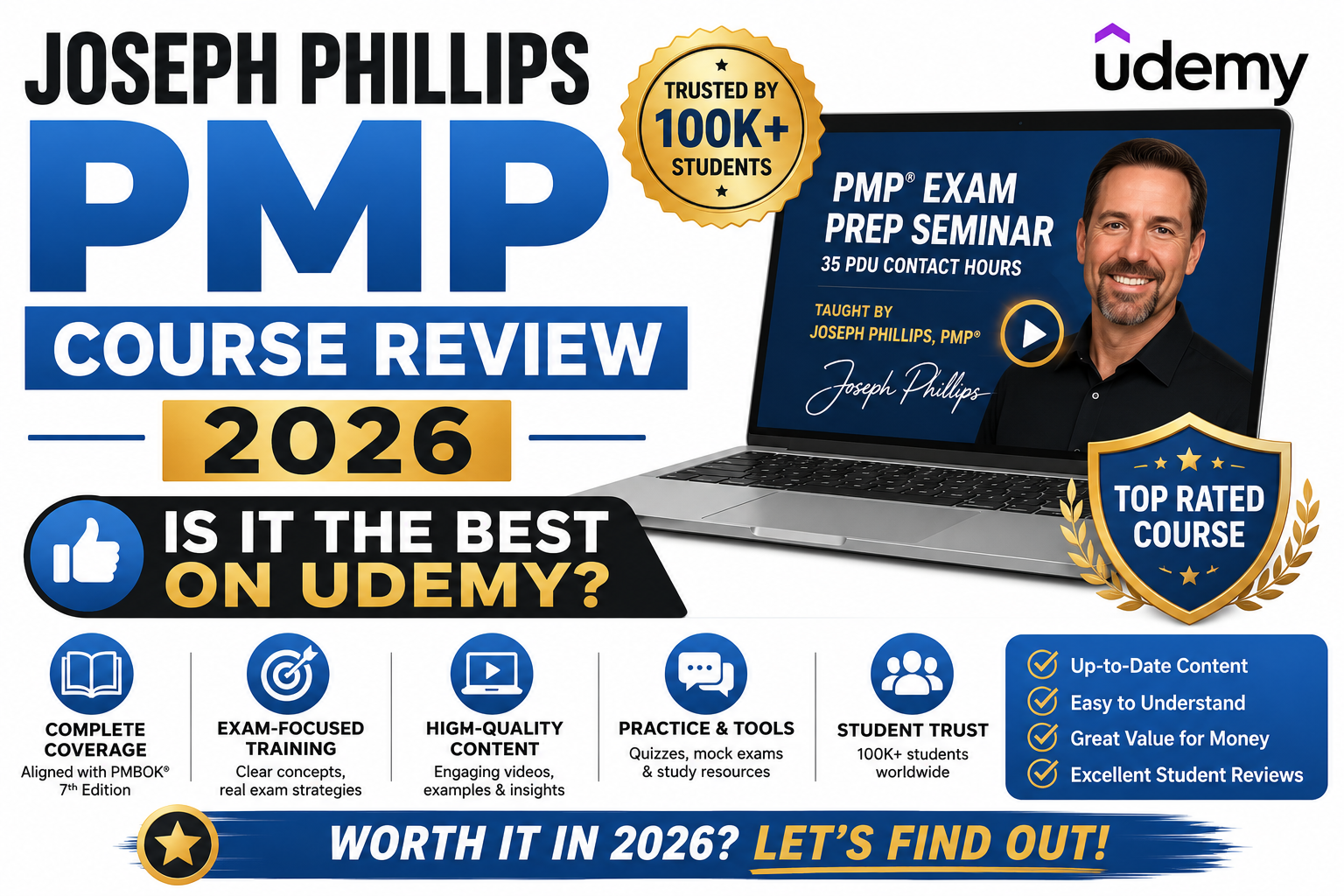
| Comfortable ($300-500) | Combine a comprehensive course with a dedicated simulator | Joseph Phillips or similar full course PLUS PM PrepCast for realistic practice |
| Generous ($500+) | Multiple resources covering all formats | Full course, dedicated simulator, supplementary book, possibly 1-on-1 mentor support |
The relationship between spending and pass probability is not linear. The jump from $0 to $150 (basic PMI resources) provides enormous value. The jump from $300 to $500 provides much smaller marginal benefit. Spend where the marginal value is highest — which is almost always in your specific weak areas, not in accumulating more general resources.
What I Would Tell a Friend Asking This Question Directly
If someone close to me asked exactly which course to buy, here is what I would actually say: get your required training from a credible provider — that satisfies your eligibility requirement and likely gives you solid materials. Read the PMBOK Guide and Agile Practice Guide properly, not as a checklist. Do enough practice questions — from whatever credible source, free or paid — that you consistently score above 70% on timed sessions. If a specific area remains weak after that, add one targeted resource for that gap.
That is the entire framework. Everything else is detail. The certification rewards genuine engagement and understanding — not the number of resources in your shopping cart.
About the Author
Rahul Dhakate is a PMP and PSM I certified project manager and product management leader based in Nagpur, India, with 20 years of experience managing software projects across BFSI, eCommerce, and enterprise software. He completed his required PMP training through a credible provider and supplemented it with PMBOK Guide study and online research, finding this combination entirely sufficient for exam success. He writes at LearnXYZ.in to help working professionals pass the PMP exam and build modern project management careers.
Great Reads