By Rahul Dhakate · PMP & PSM I Certified · 24 June 2026 · learnxyz.in
I want to start this comparison with an honest disclosure: I did not use Rita Mulcahy’s book when I prepared for my own PMP exam. My primary study materials were the PMBOK Guide itself, supplemented by study materials and practice question papers provided by my mentor through the PMP classroom training I attended, plus additional research through project management websites and resources.
This means my perspective on Rita Mulcahy’s book specifically comes from research and widespread candidate feedback rather than personal use. I think that distinction matters — and I want to give you an honest, well-researched comparison rather than pretend personal experience I do not have.
Contents
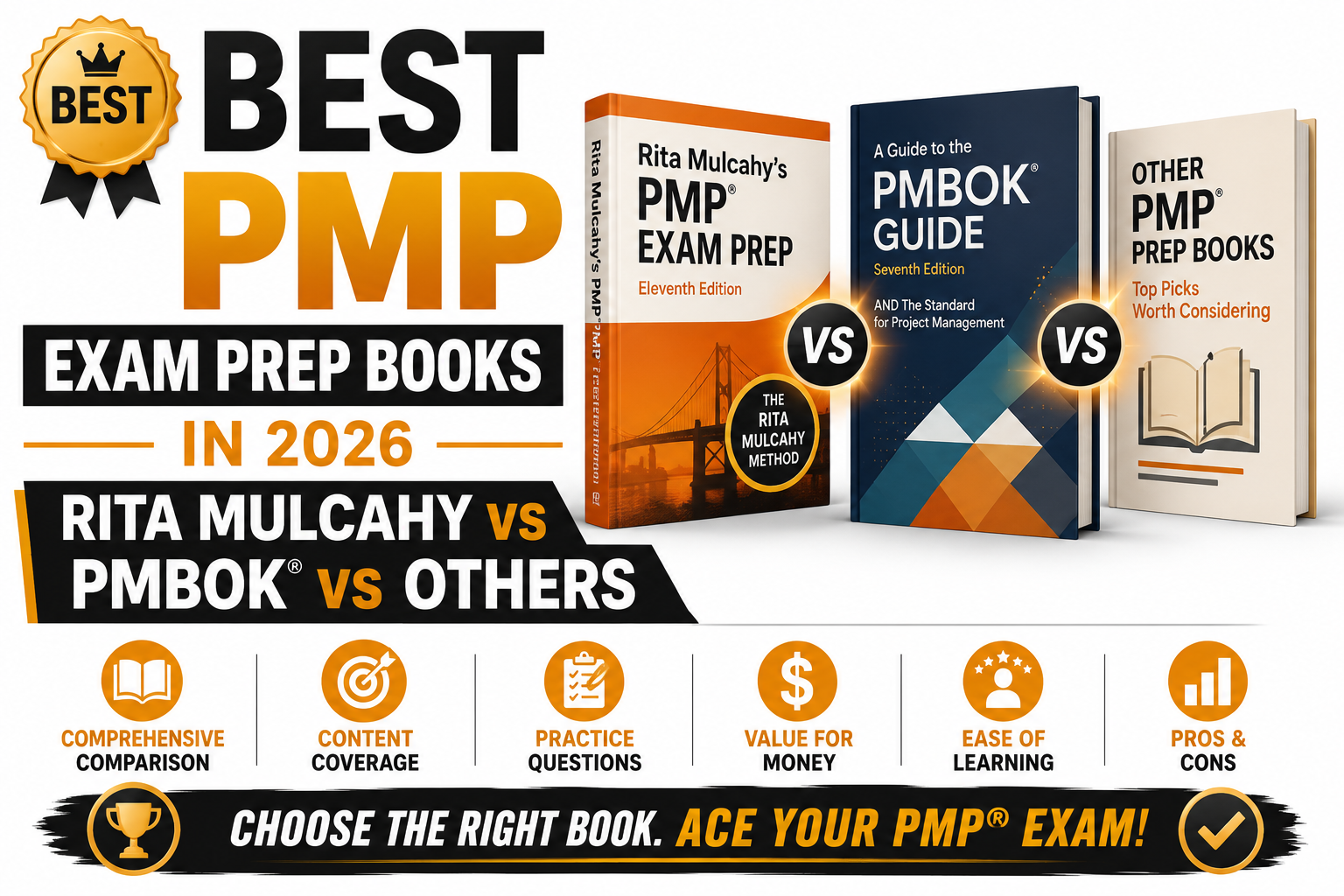
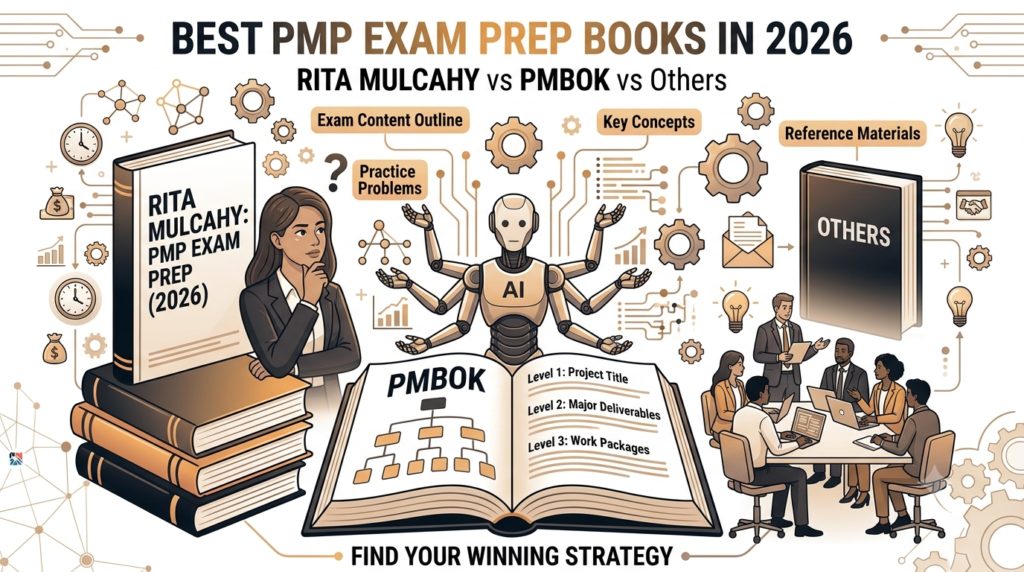
Best PMP Exam Prep Books in 2026: Rita Mulcahy vs PMBOK vs Others.
The PMBOK Guide — The Foundation Everyone Needs.
Rita Mulcahy’s PMP Exam Prep — What the Research Shows.
The PMBOK Guide — The Foundation Everyone Needs
The PMBOK Guide 7th Edition is published by PMI itself and is the official source document the PMP exam is based on. It is included free with PMI membership in digital format.
My own preparation relied heavily on the PMBOK Guide as the primary text. What I found is that the 7th edition’s shift to a principles-based framework — rather than the older process-group structure — requires careful, attentive reading. It is not a book you skim. Each principle needs to be understood in the context of how PMI expects you to apply judgment, not just recall definitions.
My primary materials for studying were the PMBOK Guide along with other websites covering project management concepts. The PMBOK is dense, but it is the actual source of truth for the exam. Everything else — books, courses, simulators — exists to help you understand and apply what is in the PMBOK more effectively.
Rita Mulcahy’s PMP Exam Prep — What the Research Shows
Rita Mulcahy’s PMP Exam Prep book has been one of the most recommended PMP study books for over a decade, even after her passing. The book is known for translating PMBOK’s dense, principles-based language into more accessible explanations, memory aids, and practice questions organised by knowledge area.
Candidate feedback consistently highlights: clear explanations of complex topics like EVM and procurement, useful chapter-end practice questions, and a writing style that feels more like being taught by an experienced PM than reading a standards document.
The most commonly cited limitation: at over 600 pages, it requires real time investment, and some candidates find certain sections more detailed than necessary for exam purposes versus real-world depth.
Side-by-Side Comparison
| Book | Price (approx) | Best For | Limitation |
| PMBOK Guide 7th Edition | Free with PMI membership | The actual source of exam content — non-negotiable | Dense, principles-based, requires careful study |
| Rita Mulcahy PMP Exam Prep | $60-80 USD | Accessible explanations and practice questions | Long — 600+ pages requires real time commitment |
| Agile Practice Guide | Free with PMI membership | Required for the 50% Agile exam content | Companion guide — needs the PMBOK alongside it |
| Andrew Ramdayal PMP Exam Prep (Book) | $25-35 USD | Agile-focused situational question training | Newer — less established track record than Rita Mulcahy |
| Head First PMP | $45-55 USD | Visual learners — heavy use of diagrams and illustrations | Less comprehensive on advanced calculation topics |
Books vs Other Study Formats
Whether you choose a dedicated prep book or rely on PMBOK plus online resources, the fundamental study principle is the same: depth of engagement matters more than the specific format. My own approach of combining the PMBOK Guide with project management websites worked because I engaged deeply with the material — not because it was the optimal resource combination in the abstract.
If you are choosing between books: the PMBOK Guide plus the Agile Practice Guide are not optional — they are the actual source of the exam. A supplementary book like Rita Mulcahy’s adds accessibility and practice questions, but it cannot replace direct engagement with the source material.
My Honest Recommendation
Start with the PMBOK Guide and the Agile Practice Guide — both free with PMI membership. Read them properly, not as a checklist exercise but with genuine attention to the principles being taught. If you find the PMBOK’s dense writing style difficult to engage with consistently, add Rita Mulcahy’s book or a similar accessible prep book as a translation layer.
What matters most is not which specific book you choose — it is whether you engage deeply enough with the material to develop genuine understanding rather than surface familiarity. I passed using PMBOK plus mentor materials plus online research. Others pass using Rita Mulcahy plus practice questions. Both paths work when the engagement is genuine.
| Rita Mulcahy PMP Exam Prep | Amazon Associates | Add your Amazon affiliate link here |
| PMBOK Guide 7th Edition (Print) | Amazon Associates | Add your Amazon affiliate link here — free digital via PMI membership |
| Head First PMP | Amazon Associates | Add your Amazon affiliate link here |
About the Author
Rahul Dhakate is a PMP and PSM I certified project manager and product management leader based in Nagpur, India, with 20 years of experience managing software projects across BFSI, eCommerce, and enterprise software. He prepared for the PMP primarily using the PMBOK Guide, mentor-provided study materials, and project management research resources rather than commercial prep books. He writes at LearnXYZ.in to help working professionals pass the PMP exam without unnecessary expense.
Read Article

I just wanted to drop by and say how much I appreciate your blog. Your writing style is both engaging and informative, making it a pleasure to read. Looking forward to your future posts!