

![[keyword]](https://learnxyz.in/wp-content/uploads/2026/04/1777548951_Adidas-lightest-shoes-ever-were-behind-the-first-sub-2-hour-marathon.jpg)
What if the the same pair of shoes were behind three marathon world records—and the extraordinary feat of the first marathon completed in under two hours?
The 2026 London Marathon is already a historic event, thanks to the time set by Kenyan Sabastian Kimaru Sawe. He is the first athlete to complete a 26.2-mile race in under two hours, something long considered impossible for humans, crossing the finish line in 1 hour, 59 minutes and 30 seconds.
Making the London Marathon even more memorable was the performance of Ethiopian Yomif Kejelcha, who stopped the clock just 11 seconds after Sawe. Both performances shattered the previous record of 2 hours and 35 seconds set by Kelvin Kiptum in Chicago in 2023.
These resounding runs are enriched by another twist. Fans who filled the streets of the English capital witnessed another world record achieved by Ethiopian Tigst Assefa, who completed the women’s marathon in 2 hours, 15 minutes and 41 seconds.
Fancy Footwear
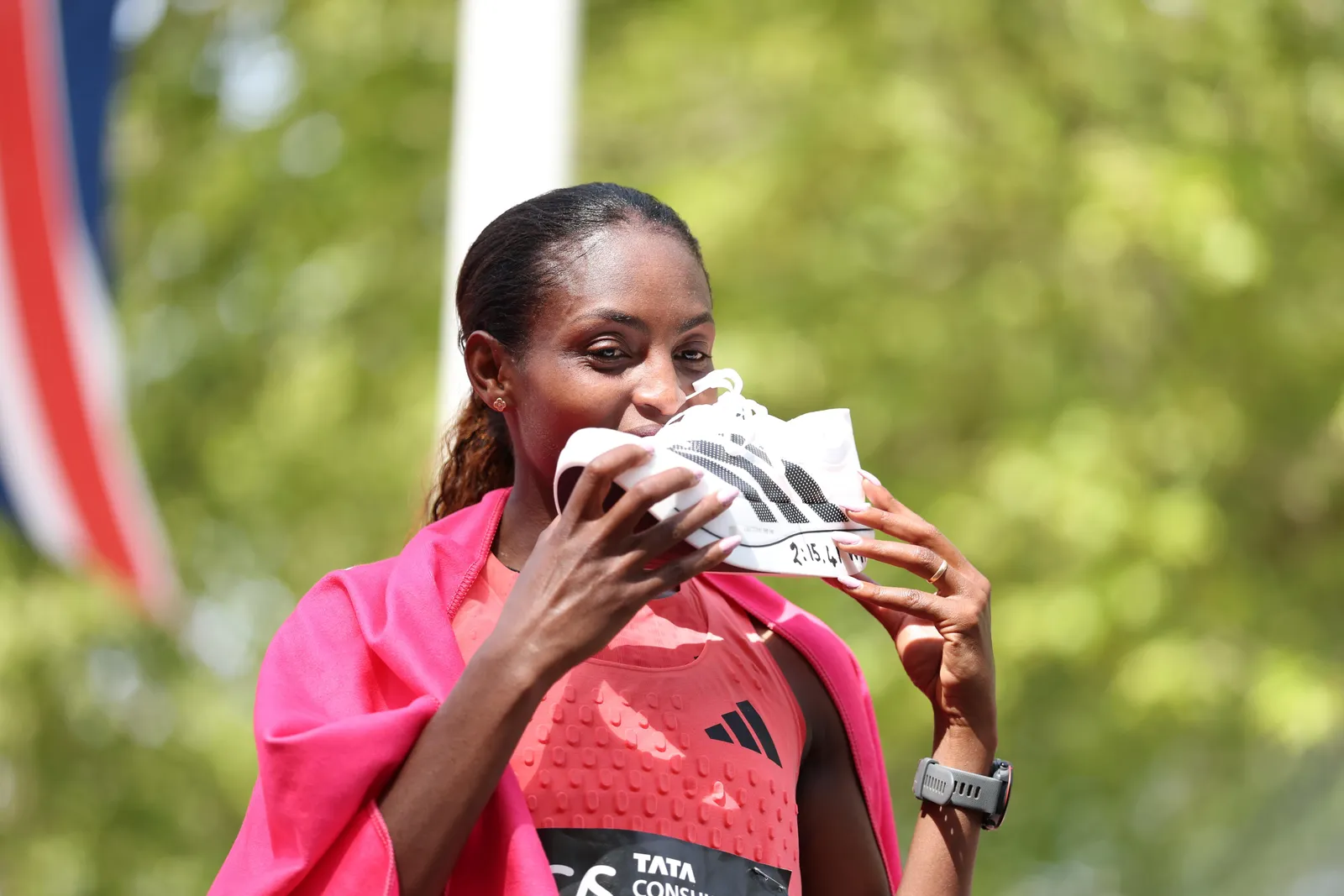
Along with talent and a lifetime of training, Sawe, Kejelcha and Assefa have another element in common: They each have the Adizero Adios Pro Evo 3 shoe, what Adidas debuts on the eve of the London Marathon. (The shoes will also be on sale soon for $500, but only through Adidas’ official app.)
The shoe that has propelled all three runners to world record achievements is the lightest model of sneakers ever made by the German manufacturer. At just 97 grams, the Evo 3 has carbon fiber elements integrated into the sole that improve the shoe’s stiffness. The Evo 3 uses Adidas’ Lightstrike Pro Evo foam, which is the company’s lightest and most resilient compound. The outsole has a rubber panel on the forefoot.
The new shoe was designed by a team led by Patrick Nava, an Italian engineer who joined Adidas in 2019 and has been heading the running department since last October. The Adizero Adios Pro Evo 3 is the result of a long development process between tests at the company’s laboratories at its headquarters in Herzogenaurach, Germany, (about 120 miles north of Munich) and high-altitude field tests in Kenya and Ethiopia that gained the athletes’ sensations and reactions.
“It was a long process because at the highest level every detail really matters, so we measured everything down to the nanogram,” says Nava.
Stepping Stones
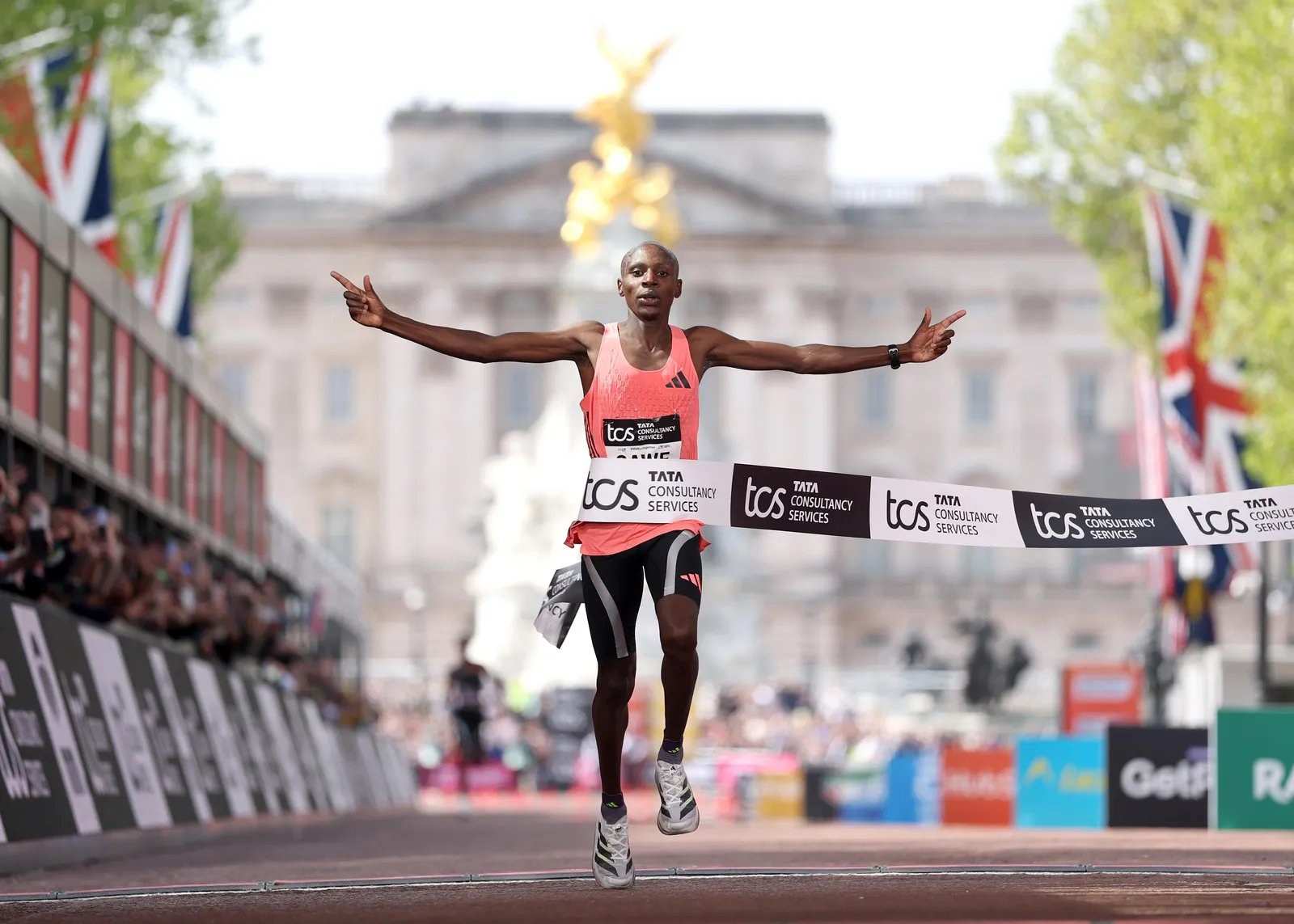
The running world has arrived at this new era for the sport with the first road test of the new shoes. Adidas has been in fierce competition with Nike for years. The Oregon company has its own Break 2 project to make shoes that would enable runners to break the two-hour mark. In 2017, Olympic champion Eliud Kipchoge ran a marathon in 2 hours and 24 seconds in Monza, Italy. He then cleared the two-hour mark two years later in Vienna, Austriawhen he stopped the clock at 1 hour, 59 minutes and 40 seconds. That time was not considered an official world record because of privileged race conditions: It was not part of an officially sanctioned race, and pacers took turns running with him.
But Kipchoge’s runs remain important milestones in the approach to the historic time recorded by Sawe, who under the guidance of his coach Claudio Berardelli has dedicated the last two years of his life to this challenge. This is his fourth marathon victory, and he underwent doping tests throughout the preparation period to clear the field of possible suspicions about an unprecedented performance.
This story was originally published by WIRED Italyand was translated from Italian.

![[keyword]](https://learnxyz.in/wp-content/uploads/2026/02/Ubuntu-Blog-Java-25-now-available-on-Google-Cloud-Serverless.png)