

![[keyword]](https://learnxyz.in/wp-content/uploads/2026/04/1776140930_French-court-rules-cement-giant-Lafarge-guilty-of-financing-Syria.jpg)
Published on April 13, 2026
A French court has found cement group Lafarge guilty of financing “terrorism” through its Syrian subsidiary, fining the company and jailing its former CEO.
The Paris court ruled on Monday that Lafarge paid protection money directly to ISIL (ISIS) and other armed groups and violated European sanctions to work in northern Syria during the country’s civil war in 2013-2014. The case is just the latest of several regarding the company’s actions during the conflict.
The court ordered Lafarge to pay a fine of 1.12 million euros ($1.32 million) and for 30 million euros ($35.1 million) of its assets to be confiscated. An additional fine was levied because international sanctions were disregarded. The judgment can be appealed.
Eight former Lafarge employees were found guilty of financing “terrorist” organizations, including former CEO Bruno Lafont, who was sentenced to six years in prison. His lawyer said he plans to appeal.
The company’s former deputy managing director, Christian Herrault, was sentenced to five years in prison. Other former employees were given fines and sentences ranging from one to seven years.
The presiding judge, Isabelle Prevost-Desprez, said the payments Lafarge made helped bolster groups that carried out deadly attacks in Syria and beyond.
“It is clear to the court that the sole purpose of funding a terrorist organization was to keep the Syrian plant running for economic reasons. Payments to terrorist entities enabled Lafarge to continue its operations,” Prevost-Desprez said.
“These payments took the form of a true commercial partnership with (ISIL),” she added.
Judges found that during the war, Lafarge paid a total of 5.59 million euros ($6.55 million) to armed groups in Syria, including to ISIL (ISIS) and the al-Nusra Front, formerly affiliated with current Syrian President Ahmed al-Sharaa.
Both outfits were designated as “terrorist” groups by the European Union between 2013 and September 2014.
Lafarge’s plant in Jalabiya, located in northern Syria and purchased by the company in 2008 for $680 million, began operating in 2010, months before the start of the Syrian uprising in early 2011.
Employees were housed in the nearby town of Manbij and had to cross the Euphrates River to access the plant. Among the payments, the court found more than 800,000 euros ($937,000) were paid to ensure safe passage.
Another 1.6 million euros ($1.87 million) was used to buy source material from quarries that were under ISIL control, the court said.
Crimes against humanity
The case was the first time a company was tried in France for financing “terrorism”, but the investigation against Lafarge has been ongoing since 2017.
In 2022, the company has a conviction on charges of crimes against humanity about the alleged payments to ISIL (ISIS) and other armed groups confirmed by a French court.
Lafarge, now part of Swiss building materials conglomerate Holcim, admitted at the time that it had paid almost 13 million euros ($15.2 million) to middlemen to keep its Syrian cement factory running during the war, after other French firms pulled out of the country.
The company claimed it bears no responsibility for the money ending up in the hands of armed groups, and in 2019 won a court ruling dismissing the charge of complicity in crimes against humanity. However, an appeals court upheld the original ruling.
A second case against the cement company, over allegations of complicity in crimes against humanity, is still ongoing in France.
In a separate case in the United States, Lafarge admitted in 2022 that its Syrian subsidiary paid $6 million to ISIL and the al-Nusra Front to allow employees, customers and suppliers to pass through checkpoints. The company paid $778m in forfeiture and costs as part of a plea deal.
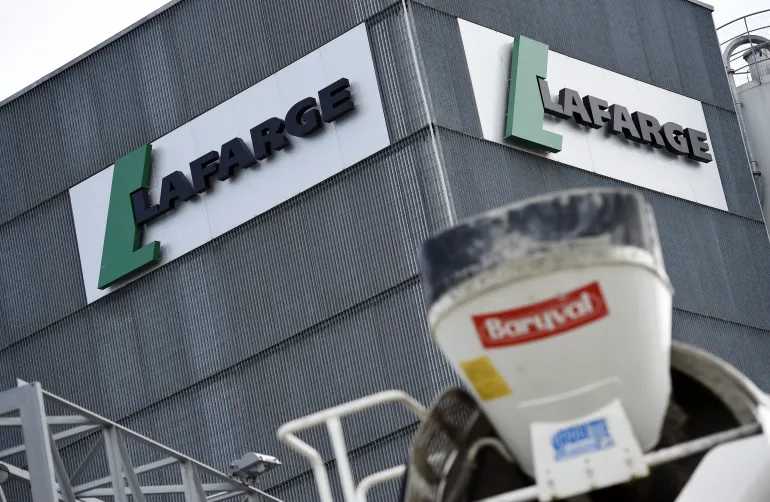
In the case decided on Monday, Lafarge was found guilty of funding “terrorist” organizations with “a single aim: profit”, according to the closing argument of the French national anti-terrorism prosecutor’s office (PNAT).
In response, the cement group said in a statement that it “acknowledges the court’s finding, which pertains to a legacy involving conduct that occurred more than a decade ago and was in flagrant violation of Lafarge’s Code of Conduct.”
“The decision is an important milestone in Lafarge SA’s actions to responsibly address this legacy case and the company is reviewing the court’s reasoning,” said Lafarge.

![[keyword]](https://learnxyz.in/wp-content/uploads/2026/03/आधा-सच-और-कोई-सच-नहीं-ब्रिटेन-के-बारे-में.jpg)
![[keyword]](https://learnxyz.in/wp-content/uploads/2026/03/ड्रोन-हमले-के-बाद-साइप्रस-में-ब्रिटेन-का-हवाई-अड्डा.jpg)
![[keyword]](https://learnxyz.in/wp-content/uploads/2026/03/दुर्घटनास्थल-पर-गिरफ्तारी-के-कुछ-घंटों-बाद-टाइगर-वुड्स-को.jpg)