

In the ever-shifting landscape of international politics, few stories have captured global attention quite like the recent U.S. involvement in Venezuela under President Donald Trump. As of early 2026, Trump’s bold military operation in the South American nation has sparked debates, protests, and economic ripples worldwide. But why does Trump want Venezuela? Is it purely about oil, regime change, or something more strategic? This article dives deep into the Venezuela crisis, exploring its roots, the areas Trump is focusing on, the far-reaching impacts, and why this matters on a global scale. From humanitarian disasters to energy markets, we’ll examine how this unfolding drama reshapes alliances and power dynamics.
Venezuela, once a beacon of oil wealth in Latin America, has descended into one of the most severe crises in modern history. Trump’s interest isn’t new—during his first term, he imposed sanctions and recognized opposition leaders—but his 2026 actions mark a dramatic escalation. Understanding Trump’s motivations requires peeling back layers of economic, political, and security interests. Let’s start by breaking down the crisis itself.
The Venezuela Crisis: A Perfect Storm of Economic Collapse and Political Turmoil
The Venezuela crisis didn’t erupt overnight; it’s the culmination of decades of mismanagement, corruption, and external pressures. At its core, the crisis revolves around the socialist policies implemented by Hugo Chávez and continued by his successor, Nicolás Maduro. Venezuela sits on the world’s largest proven oil reserves, but heavy reliance on petroleum exports left the economy vulnerable to price fluctuations. When oil prices plummeted in the mid-2010s, the country spiraled into hyperinflation, food shortages, and widespread poverty.
By 2026, hyperinflation has reached staggering levels, with estimates suggesting rates exceeding 1,000% annually in recent years. Corruption within the government, including embezzlement from state-owned oil company PDVSA, has exacerbated the issues. Maduro’s regime has been accused of rigging elections, suppressing dissent, and aligning with drug cartels, turning Venezuela into what some call a “narco-state.” The 2018 presidential election, widely deemed fraudulent, led to Maduro’s disputed second term, prompting international condemnation.
The human toll is devastating. Over 7 million Venezuelans have fled as refugees, straining neighboring countries like Colombia and Brazil. Inside Venezuela, access to basic necessities like electricity, water, and medicine is erratic. The COVID-19 pandemic and ongoing sanctions amplified these woes, leading to a humanitarian catastrophe. World Vision reports that years of economic mismanagement and corruption have left millions in dire need.
Politically, the crisis pits Maduro’s authoritarian rule against opposition figures like Juan Guaidó (recognized by the U.S. as interim president in 2019) and more recently, María Corina Machado, who has emerged as a key player in transition talks. The opposition accuses Maduro of human rights abuses, including arbitrary detentions and extrajudicial killings. International bodies like the UN have documented these violations, painting a picture of a nation on the brink.
Economically, Venezuela’s GDP has shrunk by over 75% since 2013, with oil production dropping from 3 million barrels per day to under 1 million due to sanctions, lack of investment, and mismanagement. This has global implications, as Venezuela’s oil once fueled economies across the Americas. The crisis isn’t just internal; it’s a regional powder keg with tentacles reaching into drug trafficking, migration, and geopolitics.
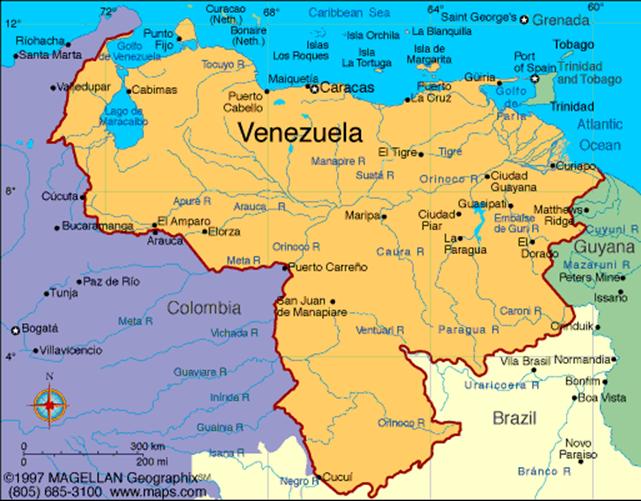
Venezuela Map: Regions, Geography, Facts & Figures | Infoplease
Trump’s Motivations: Why Does He Want Venezuela?
Donald Trump’s fascination with Venezuela dates back to his first presidency, but his 2026 military intervention represents a aggressive pivot. On January 3, 2026, Trump announced a U.S. operation targeting Venezuelan assets, citing Maduro’s regime as a “narco-terrorist organization.” In a press conference, he emphasized reclaiming “stolen oil money” and developing Venezuela’s reserves through U.S. firms. Critics argue this is less about democracy and more about securing resources for American interests.
Trump’s policy blends economic opportunism with security concerns. He views Venezuela’s oil as a strategic asset, especially amid global energy shifts toward renewables and away from Russian supplies post-Ukraine invasion. By intervening, Trump aims to stabilize oil prices and boost U.S. energy dominance. Reports suggest the operation serves “triple goals”: crippling Maduro, disrupting drug routes, and gaining oil access.
Politically, Trump’s base appreciates his tough stance on socialism and migration. Venezuelan refugees have become a flashpoint in U.S. debates, with Trump linking the crisis to border security. His plan involves coercing Venezuelan leaders into aligning with U.S. interests, as seen in his inclusion of opposition figure María Corina Machado in transition strategies. This echoes his “America First” doctrine, prioritizing U.S. gains over multilateral approaches.
However, the intervention has drawn fire for bypassing Congress and invoking the Monroe Doctrine, a 19th-century policy asserting U.S. dominance in the Western Hemisphere. Detractors, including progressive think tanks, claim it’s imperialistic, serving Big Oil rather than Venezuelans. Trump counters that sanctions alone failed, necessitating direct action. His rhetoric frames Maduro as a threat akin to drug lords, justifying maritime strikes and potential regime change.
In essence, Trump’s “want” for Venezuela is multifaceted: economic control, political leverage, and a showcase of U.S. might. But this raises questions about legality—experts argue it violates international law without UN approval.
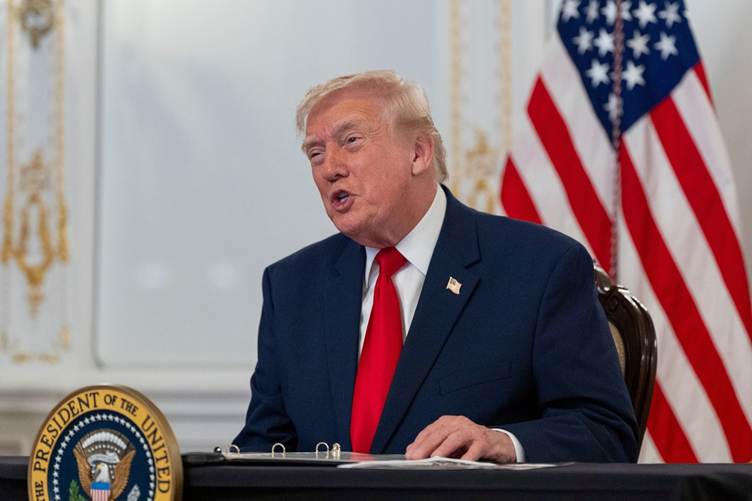
Ramping up pressure, Trump says Venezuela airspace should be …
Key Areas of Focus in the Crisis and U.S. Strategy
The Venezuela crisis and Trump’s intervention zero in on several critical areas: energy, security, humanitarian aid, and political reform.
First, energy dominates. Venezuela’s Orinoco Belt holds vast untapped reserves, but sanctions and decay have halted progress. Trump’s operation aims to revitalize this, with U.S. companies poised to invest in infrastructure like refineries and pipelines. This focuses on restoring electricity and stable fiscal terms to attract foreign capital.
Security is another pillar. Trump accuses Maduro of facilitating drug trafficking, with operations targeting vessels allegedly carrying narcotics. The crisis has enabled organized crime, including illicit gold trade, which U.S. actions seek to dismantle. This ties into broader anti-narco efforts in the Americas.
Humanitarian aspects focus on alleviating suffering. The exodus of millions has overwhelmed regional systems, prompting U.S. aid pledges amid intervention. However, critics say military action has deepened trauma for Venezuelans.
Politically, the emphasis is on democratic transition. Trump’s strategy includes empowering opposition leaders like Machado to foster elections and reforms. Areas like electoral integrity, judicial independence, and anti-corruption measures are prioritized.
These foci intersect: securing oil requires political stability, which demands addressing humanitarian needs and security threats.
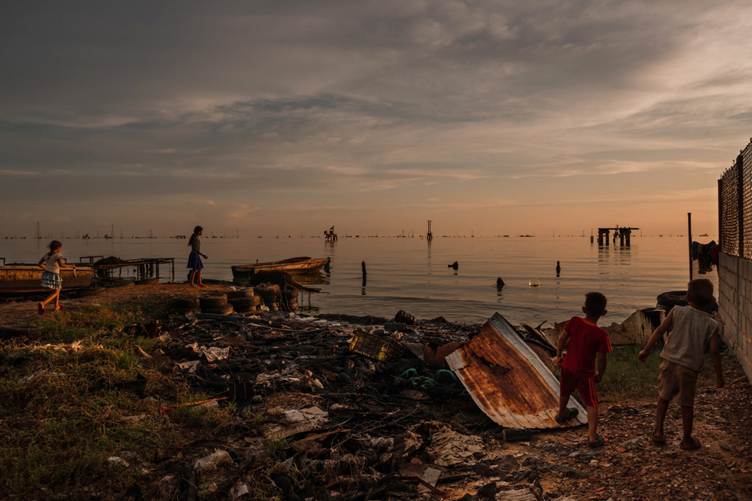
Venezuela, Once an Oil Giant, Reaches the End of an Era – The New …
The Impacts of the Venezuela Crisis and Trump’s Intervention
The crisis’s impacts are profound, rippling from local communities to global economies.
Locally, Venezuelans face intensified hardship. The 2026 operation has caused civilian casualties, disrupted supply chains, and heightened uncertainty. While some celebrate Maduro’s ousting, others fear prolonged instability. Economically, short-term oil disruptions have spiked prices, but long-term U.S. involvement could stabilize production.
Regionally, the refugee crisis burdens neighbors. Colombia hosts over 2 million Venezuelans, straining healthcare and education. Trump’s actions may stem migration by promising stability, but they’ve also sparked anti-U.S. sentiment in Latin America.
Globally, markets feel the shock. Oil volatility affects energy-dependent nations, with bonds, gold, and U.S. dollars fluctuating. Shipping routes are disrupted, impacting trade in raw materials. Politically, it erodes trust in U.S. leadership, with allies questioning unilateralism.
On a positive note, successful transition could model democracy promotion, but risks include empowering criminal networks or sparking copycat interventions.
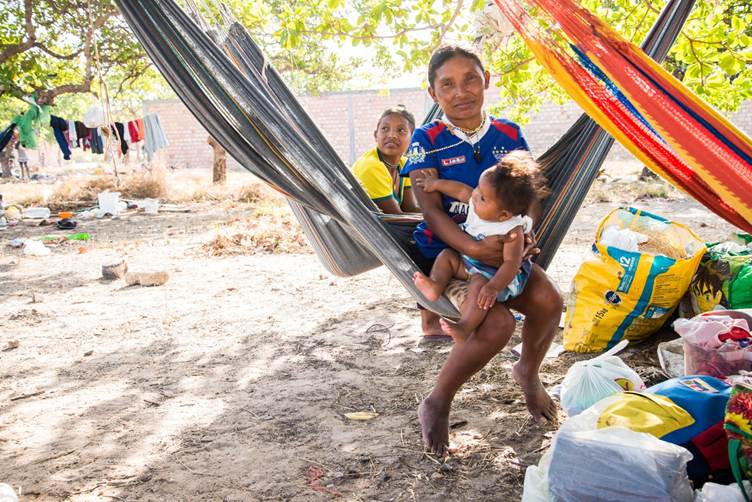
Venezuelan Humanitarian and Refugee Crisis – CDP
Why the Venezuela Crisis Matters in a World Perspective
From a global viewpoint, the Venezuela crisis under Trump’s lens is a litmus test for international norms. It highlights the limits of sanctions as a tool—valuable for signaling disapproval but insufficient for change. Trump’s intervention underscores U.S. willingness to act alone, challenging multilateralism and bodies like the UN.
Geopolitically, it affects great-power rivalries. Russia and China, Maduro’s backers, lose influence, potentially shifting alliances in Latin America. For energy security, stabilizing Venezuela could reduce dependence on Middle Eastern oil, aiding climate goals by enabling transitional fuels.
Humanitarian-wise, it spotlights migration as a global issue, urging coordinated responses. Economically, it warns against over-reliance on commodities, a lesson for oil-rich nations.
In broader terms, this crisis questions sovereignty versus intervention. Trump’s approach, seen as imperialistic by some, could set precedents for dealing with rogue states, influencing conflicts from Iran to North Korea.
Ultimately, Venezuela’s fate shapes the future of democracy, resource management, and international law in an interconnected world.
Conclusion: Navigating the Path Forward
Trump’s pursuit of Venezuela blends ambition with controversy, rooted in a crisis of epic proportions. As the world watches, the outcomes—be they prosperity or peril—will resonate far beyond borders. Balancing interests with ethics remains key to resolving this saga.
More for you


![[keyword]](https://learnxyz.in/wp-content/uploads/2026/02/Goba-was-the-president-of-Newya-Mod-honored-by.jpg)
![[keyword]](https://learnxyz.in/wp-content/uploads/2026/02/Buns-and-Hisawa-Sadashivpet-Musidubivad-and-Polis-Hirasat-were-in.jpg)