


In the ever-evolving landscape of global geopolitics, few proposals have captured international attention quite like Donald Trump’s persistent push for the United States to acquire Greenland. As the world’s largest island and a strategic Arctic outpost, Greenland has become a focal point in discussions about national security, resource exploitation, and territorial expansion. Trump’s Greenland acquisition strategy first made headlines in 2019 during his initial presidency, but it resurfaced with renewed vigor in his second term starting in 2025. By January 2026, the issue had escalated into a full-blown diplomatic crisis, complete with tariff threats, protests, and warnings of potential NATO fractures. This article delves into the facts behind Trump’s Greenland ambitions, exploring the historical context, key motivations, international reactions, and broader implications. From Arctic security concerns to rare earth minerals in Greenland, we unpack why this “real estate deal” could reshape the world order. Whether viewed as a bold national security move or an imperial overreach, Trump’s strategy highlights the intersection of climate change, military strategy, and economic power in the 21st century.
Historical Context: America’s Long-Standing Interest in Greenland
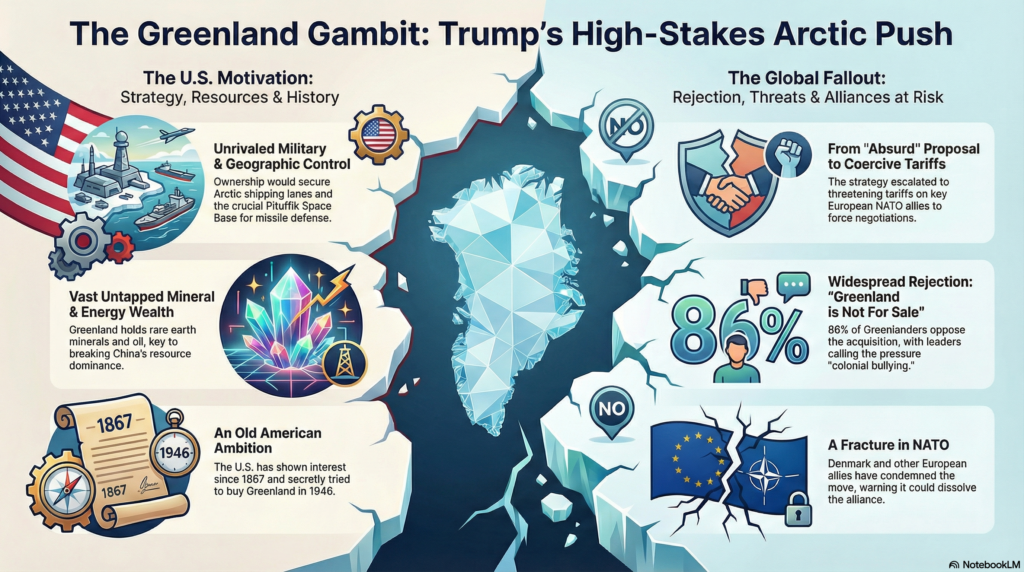
The idea of the United States acquiring Greenland is far from a novel concept invented by Trump. American interest in the island dates back to the 19th century, rooted in expansionist policies that saw the U.S. purchase vast territories like Alaska from Russia in 1867 and the Louisiana Purchase from France in 1803. In 1867, Secretary of State William H. Seward, fresh off the Alaska deal, advocated for acquiring Greenland and Iceland from Denmark, viewing them as stepping stones to control North Atlantic trade routes. Although no formal offer was made at the time, the notion persisted into the 20th century.
World War II marked a turning point in U.S.-Greenland relations. With Denmark occupied by Nazi Germany in 1940, the U.S. invoked the Monroe Doctrine to justify its military presence on the island, fearing German U-boats could use it as a base to attack North America. Under the 1941 Defense of Greenland Agreement, American forces built airfields and weather stations, effectively occupying the territory for the duration of the war. This period solidified Greenland’s strategic value, particularly for monitoring transatlantic shipping and aviation routes.
Post-war, the Cold War amplified these interests. In 1946, President Harry Truman secretly offered Denmark $100 million (equivalent to about $1.5 billion today) to purchase Greenland outright, citing its importance for defending against Soviet threats. Denmark rejected the offer, preferring to maintain sovereignty while allowing U.S. bases. This led to the 1951 Greenland Defense Agreement, which permitted unlimited U.S. military access in exchange for security guarantees. The agreement facilitated the construction of Thule Air Base (now Pituffik Space Base), a key site for ballistic missile early-warning systems and space operations.
Throughout the 1950s and beyond, U.S. military leaders, including the Joint Chiefs of Staff, revisited acquisition ideas, but deemed them unnecessary given existing access rights. Greenland’s status evolved under Danish rule: it became an integral part of Denmark in 1953, gained home rule in 1979, and achieved self-government in 2009, handling internal affairs while Denmark manages foreign policy and defense. This autonomy has fueled independence movements, with polls showing two-thirds of Greenlanders supporting eventual separation, though economic dependence on Danish subsidies (about $800 million annually) complicates matters.
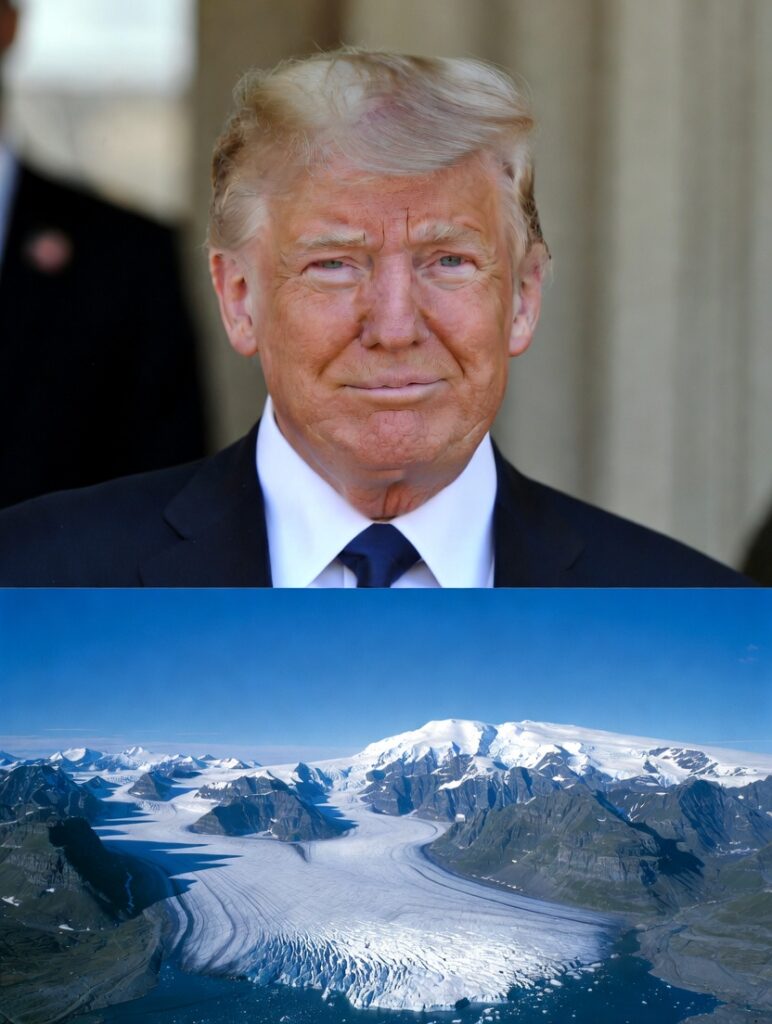
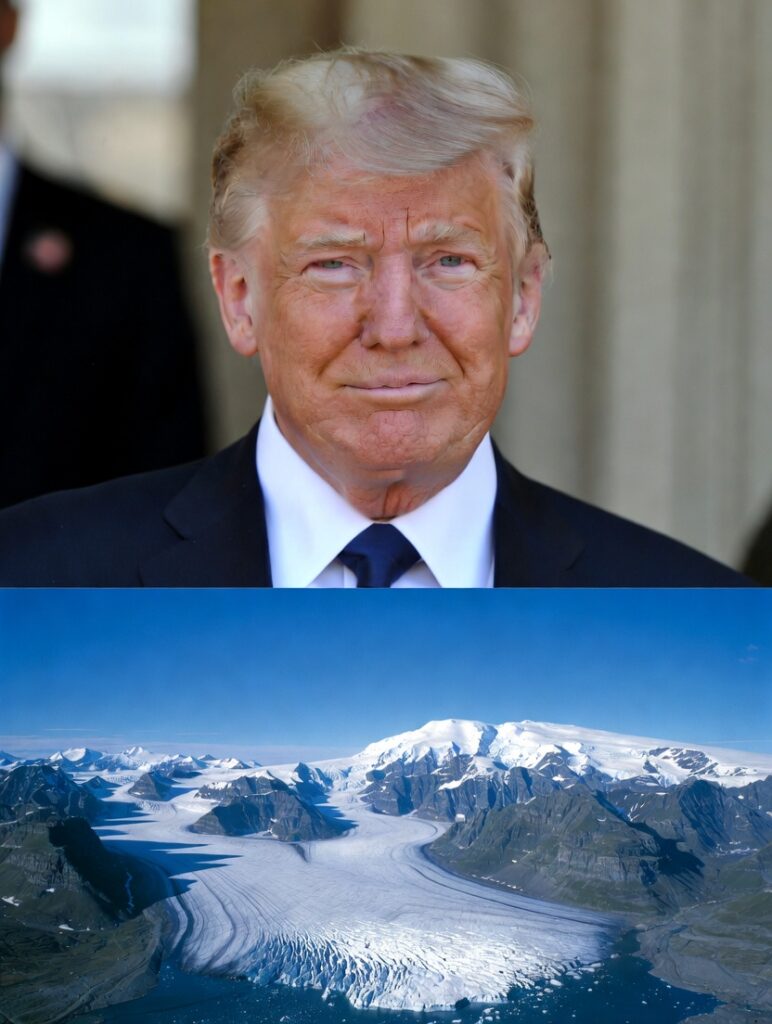
These historical precedents set the stage for modern pursuits. Greenland’s vast ice sheet covers 80% of its land, but melting due to climate change is exposing new resources and shipping lanes, making it a hotspot in the Arctic great-power competition. The U.S. has maintained a consulate in Nuuk since 2020 to counter Chinese and Russian influence, mapping mineral deposits and investing in infrastructure. This long history underscores that Trump’s Greenland acquisition strategy is not an aberration but an extension of America’s manifest destiny mindset applied to the Arctic frontier.
Trump’s Initial Proposal: The 2019 “Absurd” Idea
Donald Trump’s first public foray into the Greenland debate came in August 2019, when reports surfaced that he had instructed aides to explore purchasing the island from Denmark. Trump framed it as a “large real estate deal,” emphasizing its potential for U.S. national security and economic benefits. Influenced by advisors like Senator Tom Cotton and billionaire donors, he saw it as a legacy-defining move akin to past territorial expansions.
The proposal quickly sparked backlash. Danish Prime Minister Mette Frederiksen dismissed it as “absurd,” asserting that Greenland was not for sale and belonged to its people. Greenlandic leaders, including then-Premier Kim Kielsen, echoed this sentiment, stressing self-determination while expressing openness to stronger U.S. ties short of annexation. Trump, offended by the rejection, canceled a planned state visit to Denmark, tweeting that Frederiksen’s comments were “nasty.” The incident strained U.S.-Danish relations temporarily, but diplomacy prevailed, with both sides reaffirming NATO commitments.
At the time, Trump’s motivations were multifaceted. He highlighted Greenland’s strategic location for controlling the GIUK Gap—a critical North Atlantic chokepoint for submarine detection and maritime defense against Russia. Additionally, the island’s untapped resources, including rare earth minerals essential for electronics and green energy technologies, were seen as a counter to China’s dominance in the sector. Estimates pegged the purchase price between $12.5 billion and $1.1 trillion, factoring in subsidies and potential mining revenues.
Public opinion in Greenland was overwhelmingly against the idea, with 85% rejecting U.S. integration in polls. However, some saw opportunities for independence discussions, proposing models like a Compact of Free Association (COFA) with the U.S., similar to those with Pacific islands nations. The 2019 episode faded from headlines, but it planted seeds for future escalation, revealing Trump’s transactional approach to foreign policy.
Renewal in the Second Term: From Rhetoric to Tariffs
Trump’s return to the White House in 2025 reignited the Greenland saga with unprecedented intensity. In December 2024, as president-elect, he posted on Truth Social about reclaiming U.S. “manifest destiny” in the Arctic, explicitly calling for Greenland’s acquisition to prevent Russian or Chinese encroachment. By January 2025, he appointed Louisiana Governor Jeff Landry as a special envoy to negotiate with Denmark and Greenland.
The strategy evolved from mere proposals to coercive tactics. Trump refused to rule out military force, stating in interviews that U.S. ownership was an “absolute necessity” for national security. His son, Donald Trump Jr., visited Nuuk amid allegations of bribery and racial insensitivity, further inflaming tensions. U.S. intelligence operations reportedly aimed to foment secessionist sentiments in Greenland, prompting Denmark to summon American diplomats and classify the U.S. as a potential security threat.
Escalation peaked in January 2026 when Trump announced 10% tariffs on goods from Denmark, Norway, Sweden, France, Germany, the UK, the Netherlands, and Finland, effective February 1, rising to 25% by June unless a deal was reached. He justified this by accusing these NATO allies of “freeloading” on U.S. defense while blocking access to Greenland. This “Greenland tariffs” move blindsided allies, with no prior warnings through official channels.
In Greenland, Prime Minister Jens-Frederik Nielsen led protests in Nuuk, decrying the pressure as colonial bullying. Danish PM Frederiksen reiterated that annexation would violate international law and could end NATO cooperation. U.S. legislation, such as the “Make Greenland Great Again Act” and “Red, White, and Blueland Act,” proposed authorizing the purchase and even renaming the island.
Influences behind this push include billionaire donor Ronald Lauder, who suggested the idea to Trump in 2018 due to his investments in Greenland’s resources. Trump’s strategy also leverages historical grievances, like Denmark’s past sterilization programs on Greenlandic women in the 1960s-1970s, to court local support for independence under U.S. auspices.
Strategic and Economic Motivations: Beyond the Ice
At the core of Trump’s Greenland acquisition strategy lies a blend of military imperatives and economic opportunities. Geopolitically, Greenland’s position in the Arctic is unparalleled. It controls the shortest routes from Europe to North America and hosts the Pituffik Space Base, crucial for missile defense, satellite tracking, and countering hypersonic threats from Russia. With Arctic ice melting, new shipping lanes like the Northwest Passage could reduce transit times by 40%, potentially diverting trade from the Suez and Panama Canals—another Trump target.
National security experts argue that full control would secure the GIUK Gap, preventing Russian submarines and Chinese icebreakers from dominating the region. Trump has downplayed resources but acknowledged their value: Greenland holds vast deposits of rare earth elements (25 of Europe’s 34 critical minerals), oil (estimated 300-400 billion barrels worth), natural gas, and freshwater. These could break China’s 90% monopoly on rare earths, vital for electric vehicles, wind turbines, and military tech.
Economically, Greenland’s $3 billion GDP relies on fishing (90% of exports) and Danish subsidies covering half its budget. U.S. acquisition could integrate it as a territory or state, perhaps attached to Alaska, unlocking mining potential hindered by infrastructure lacks and uranium bans. Trump envisions it as a “win-win,” offering Greenlanders U.S. citizenship and investment while bolstering American energy independence.
Critics, however, warn of environmental risks—accelerated mining could exacerbate climate change—and legal hurdles. Any sale requires a Danish constitutional amendment and Greenlandic referendum, with independence more likely leading to a COFA rather than outright purchase. Trump’s approach, blending tariffs and threats, aims to pressure Denmark into negotiations, potentially exchanging favorable trade deals for territorial concessions.
International Reactions and Implications: A NATO Rift?
Reactions to Trump’s strategy have been swift and severe. In Greenland, 86% oppose forcible acquisition, with emotional pleas from leaders like Foreign Minister Vivian Motzfeldt highlighting cultural sovereignty. Protests in Nuuk featured signs reading “Not For Sale,” reflecting fears of becoming a U.S. outpost.
Denmark views it as an assault on its sovereignty, boosting defense spending on ships, drones, and F-35s. European leaders, including Germany’s Olaf Scholz and France’s Emmanuel Macron, condemned the tariffs as bullying, warning of retaliatory measures that could spark a transatlantic trade war.
The implications extend to NATO: Seizing Greenland from ally Denmark could dissolve the alliance, as Frederiksen warned. Russia and China watch gleefully, with Moscow dismissing U.S. fears as hysteria. Domestically, U.S. polls show 53-86% opposition, viewing it as unnecessary given existing bases.
Broader effects include heightened Arctic tensions, potential economic disruptions from tariffs, and a test of international law in an era of great-power rivalry.
Conclusion: The Future of Trump’s Arctic Ambition
Trump’s Greenland acquisition strategy represents a high-stakes gamble blending historical precedents with modern geopolitics. While motivations like Arctic security and rare earth minerals are compelling, the coercive tactics risk alienating allies and igniting conflicts. As of January 2026, no deal is in sight, but the saga underscores the volatile intersection of climate change, resources, and power. Whether it leads to negotiation or escalation remains uncertain, but one thing is clear: Greenland’s fate could define the next chapter in global relations.


![[keyword]](https://learnxyz.in/wp-content/uploads/2026/02/Nexdigm-was-again-selected-for-Everest-Groups-Global-PEAK-Matrix.jpg)
![[keyword]](https://learnxyz.in/wp-content/uploads/2026/02/SIR-voter-list-in-other-words.jpg)
Hello! I’m at work browsing your blog from my new apple iphone!
Just wanted to say I love reading your blog and look forward to all your posts!
Keep up the great work!
whoah this weblog is excellent i really like reading your articles.
Stay up the great work! You understand, many persons are looking around for this info, you could aid them
greatly.
Thank you for the auspicious writeup. It in fact was a amusement
account it. Look advanced to far added agreeable from you!
By the way, how can we communicate?
Way cool! Some very valid points! I appreciate you writing this article and the rest of the site is extremely good.
Woah! I’m really loving the template/theme of this blog.
It’s simple, yet effective. A lot of times it’s tough to get that “perfect balance”
between usability and visual appeal. I must say that you’ve done a
fantastic job with this. Also, the blog loads extremely
quick for me on Opera. Exceptional Blog!
Woah! I’m really enjoying the template/theme of this website.
It’s simple, yet effective. A lot of times it’s very hard to
get that “perfect balance” between superb usability and
visual appearance. I must say you’ve done a very good job with this.
In addition, the blog loads super fast for me on Firefox.
Excellent Blog!
Currently it looks like Drupal is the top blogging platform available
right now. (from what I’ve read) Is that what you’re using on your blog?
It is the best time to make some plans for the long run and it’s time to be happy.
I have read this submit and if I could I want to recommend you some attention-grabbing things or tips.
Perhaps you can write next articles relating to this article.
I wish to learn more things approximately it!
I have to thank you for the efforts you have put in penning
this site. I really hope to check out the same high-grade blog
posts by you in the future as well. In truth, your creative writing
abilities has encouraged me to get my own site now 😉
Hello, its pleasant post about media print, we all
be familiar with media is a enormous source of facts.
Hi my loved one I wish to say that this post is amazing nice written and include approximately all vital infos Id like to peer more posts like this
I was suggested this blog by my cousin. I’m not sure whether this
post is written by him as nobody else know such detailed about my problem.
You’re incredible! Thanks!
hi!,I love your writing very so much! proportion we keep in touch more approximately your post on AOL?
I require a specialist on this area to solve my problem.
Maybe that’s you! Having a look forward to look you.