

A Comprehensive Deep-Dive into Future Trends & Innovation
Introduction: The Age of Exponential Growth
We are currently living in an era defined not by linear progress, but by exponential transformation. For centuries, human advancement moved at a pace that allowed generations to adapt to new technologies. However, the convergence of digital computing, biological engineering, and renewable energy has created a feedback loop that is accelerating the rate of change beyond historical precedent.
Innovation is no longer just about creating a “better” version of a current product. It is about fundamentally reimagining how we live, work, interact, and sustain our species. As we look toward the next two decades, the boundaries between the physical, biological, and digital worlds are blurring. This article explores the core trends and innovations that will shape our future, from the rise of Artificial General Intelligence to the democratization of space exploration.
1. The Evolution of Intelligence: From Generative AI to AGI
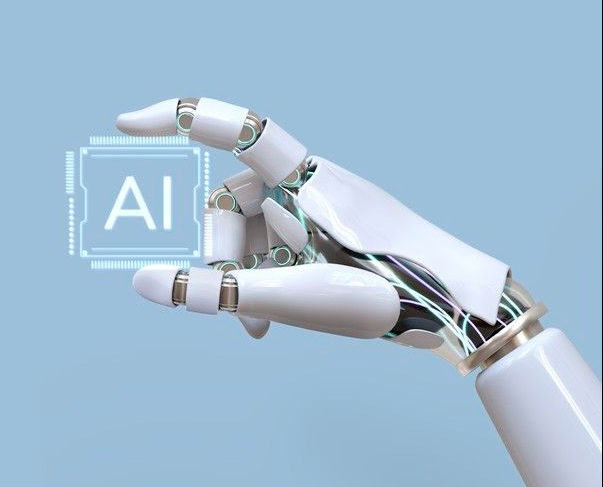
Artificial Intelligence (AI) has moved from the realm of science fiction to a foundational utility. While the early 2020s were defined by “Generative AI”—systems capable of creating text, images, and code—the next frontier is Agentic AI and the pursuit of Artificial General Intelligence (AGI).
Agentic Workflows
The immediate future of AI lies in “Agents.” Unlike current chatbots that respond to prompts, AI agents are designed to execute complex, multi-step tasks autonomously. An agent won’t just write an email; it will research a project, coordinate with team members’ calendars, book flights, and manage a budget. This shift from “AI as a tool” to “AI as a coworker” will redefine productivity.
The Path to AGI
AGI refers to a system that can understand, learn, and apply knowledge across any intellectual task that a human being can. While experts disagree on the timeline, the innovation in “Reasoning Models” (like OpenAI’s o1 series) suggests that we are moving toward systems that don’t just predict the next word, but actually engage in “System 2” thinking—deliberate, logical processing.
Humanoid Robotics
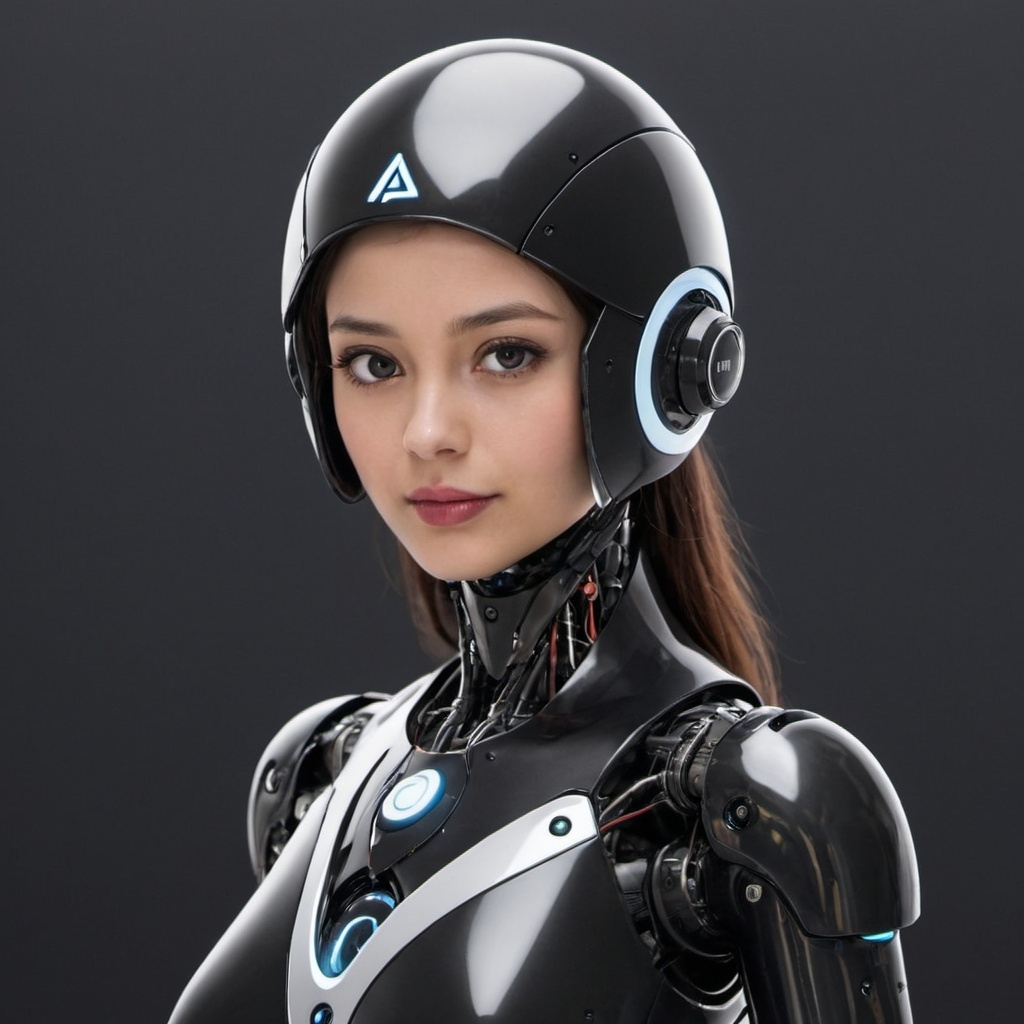
The marriage of AI with advanced hardware is giving rise to general-purpose humanoid robots. Companies like Tesla (Optimus), Figure, and Boston Dynamics are developing robots capable of navigating human environments. These machines are intended to solve labor shortages in manufacturing and logistics, and eventually, provide elderly care and domestic assistance.
2. Biotechnology and the Bio-Revolution
If the 20th century was the century of physics (the atom, the transistor), the 21st century is the century of biology. We are moving from observing nature to “programming” it.
CRISPR and Precision Medicine
Gene-editing technologies like CRISPR-Cas9 are transitioning from laboratories to clinical applications. We are on the verge of curing genetic diseases like sickle cell anemia and cystic fibrosis. Beyond curing disease, precision medicine allows for treatments tailored to an individual’s specific genetic makeup, drastically increasing the efficacy of cancer treatments and reducing side effects.
Synthetic Biology
Innovation in synthetic biology allows us to “write” DNA. This enables the creation of microbes that can produce carbon-neutral jet fuel, lab-grown meat that eliminates the need for industrial farming, and self-healing building materials. The bio-economy is expected to contribute trillions of dollars to the global GDP by 2040.
Longevity Science
The trend of “longevity” is shifting from vanity projects to rigorous science. Researchers are focusing on the hallmarks of aging—senescent cells, mitochondrial dysfunction, and telomere shortening. The goal is to extend the human “healthspan,” ensuring that people live not just longer, but free from the chronic illnesses of old age.
3. The Green Energy Transition and ClimateTech
Climate change is the most significant challenge of our time, but it is also a massive catalyst for innovation. The transition to a post-carbon economy is driving breakthroughs in energy generation, storage, and removal.
Nuclear Fusion: The Holy Grail
For decades, nuclear fusion—the process that powers the sun—has been “30 years away.” However, recent breakthroughs in high-temperature superconducting magnets and laser ignition have brought us closer than ever. Fusion offers the promise of near-limitless, clean, and safe baseload power, which would solve the energy crisis permanently.
Advanced Battery Tech and Long-Duration Storage
The intermittency of wind and solar power requires massive storage capacity. Innovation is moving beyond Lithium-ion toward solid-state batteries, which offer higher energy density and safety, and iron-air batteries, which can store energy for days at a fraction of the cost.
Carbon Capture and Removal (CDR)
Even if we stop all emissions today, we must remove existing CO2 from the atmosphere. Direct Air Capture (DAC) plants are scaling up, turning captured carbon into stone underground or using it to create synthetic fuels and plastics, fostering a “Circular Carbon Economy.”
4. Quantum Computing and 6G Connectivity
The infrastructure of our digital world is undergoing a fundamental upgrade. We are reaching the physical limits of silicon-based chips, necessitating a move toward new computing paradigms.
The Quantum Leap
Quantum computers utilize qubits, which can exist in multiple states simultaneously (superposition). This allows them to solve problems that would take classical supercomputers thousands of years. The most immediate impact will be in material science—simulating molecules to find new catalysts—and cryptography. However, quantum computing also poses a risk to current encryption, necessitating the development of “Post-Quantum Cryptography.”
6G and the Internet of Everything
While 5G is still being rolled out, research into 6G is well underway. Expected to launch around 2030, 6G will provide speeds up to 100 times faster than 5G and near-zero latency. This will enable “Spatial Computing” (seamless Augmented Reality), real-time remote surgery, and fully autonomous transport systems where vehicles communicate with each other and infrastructure in milliseconds.
5. The Commercialization of Space
We are witnessing the “Cambrian Explosion” of the space industry. Decreasing launch costs, led by reusable rockets from companies like SpaceX, have opened the final frontier to commercial enterprise.
Satellite Megaconstellations
Projects like Starlink are bringing high-speed internet to every corner of the globe. This democratization of information is a massive trend for developing nations, allowing millions to participate in the global digital economy for the first time.
In-Space Manufacturing
The microgravity environment of Low Earth Orbit (LEO) allows for the production of materials that are impossible to create on Earth, such as perfect protein crystals for pharmaceuticals, high-quality fiber optic cables (ZBLAN), and even human organs via 3D bioprinting.
The Moon and Beyond
With the Artemis program and private lunar landers, the Moon is becoming the “eighth continent.” Establishing a permanent lunar presence will serve as a stepping stone for Mars exploration and the eventual mining of asteroids for rare-earth metals, which are essential for our green energy transition on Earth.
6. The Future of Work and the Social Contract
Technology doesn’t just change what we build; it changes how we organize society. The traditional 9-to-5 office model is being disrupted by a suite of social and technological trends.
The Decentralized Workforce
As VR and AR (Spatial Computing) mature, the “office” will become a digital layer. Collaboration will occur in immersive 3D environments, rendering physical location irrelevant. This will lead to a “Global Talent War,” where companies compete for the best minds regardless of geography, but it also raises questions about the tax and legal structures of sovereign nations.
Universal Basic Income (UBI) and Post-Scarcity
If AI and robotics eventually perform the majority of physical and cognitive labor, the link between “work” and “survival” must be re-evaluated. This is driving a serious global discussion about Universal Basic Income. Innovation in this space isn’t just technological—it’s political and philosophical.
Conclusion: Embracing the Unknown
The future is not a destination we are passively moving toward; it is a landscape we are actively building. The convergence of AI, biotechnology, and sustainable energy offers the potential to solve humanity’s oldest problems: disease, poverty, and environmental degradation.
However, these innovations also bring profound ethical challenges. As we gain the power to edit the code of life and create autonomous intelligences, we must ensure that our moral and regulatory frameworks evolve at the same speed as our technology. The key to a prosperous future lies in responsible innovation—harnessing the power of the exponential age while safeguarding human dignity and the health of our planet.
Frequently Asked Questions
1. Will AI eventually replace all human jobs?
AI will likely automate specific tasks rather than entire jobs. While some roles will become obsolete, new categories of work—many of which we cannot yet imagine—will emerge. The focus will shift toward human-AI collaboration, emphasizing “soft skills” like empathy, strategic thinking, and complex problem-solving.
2. How soon will we see nuclear fusion on the power grid?
Most experts believe that commercial fusion power will likely begin to appear in the late 2030s or 2040s. While we have achieved “scientific breakeven” (producing more energy than used to start the reaction), the engineering challenge of building a reliable, continuous power plant is still significant.
3. Is gene editing safe for humans?
Current clinical trials for CRISPR focus on “somatic” cells (non-heritable). These are generally considered safe and ethical. The controversy lies in “germline” editing (changes passed to offspring), which is currently banned or strictly regulated in most countries until the long-term consequences are better understood.
4. What is the difference between Web3 and the Metaverse?
The Metaverse refers to an immersive, 3D internet experienced through VR/AR. Web3 refers to a decentralized internet built on blockchain technology. While they are different concepts, they are often linked, as blockchain can provide the ownership and economy (NFTs, digital currency) within the Metaverse.
5. Why is 6G necessary if we already have 5G?
While 5G is sufficient for smartphones, 6G is designed for the “Internet of Everything.” It will provide the massive bandwidth and ultra-low latency required for real-time digital twins, holographic communication, and high-level autonomous systems that require instant data processing from thousands of sensors.