
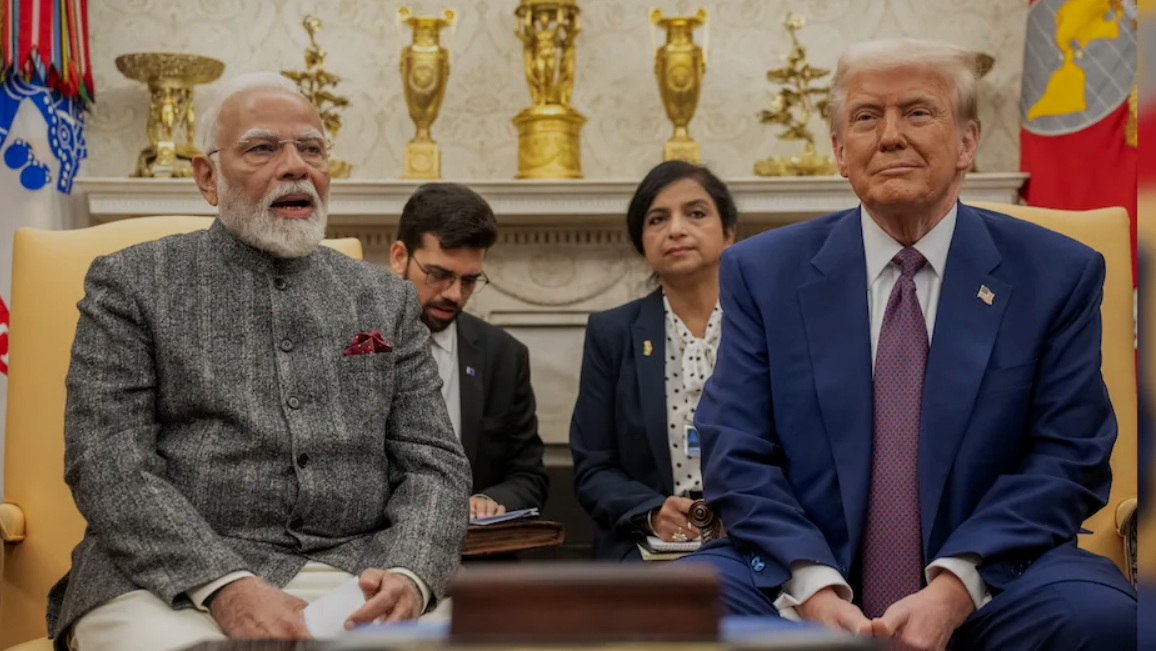
For nearly a year, the negotiations were locked in a high-stakes standoff. Tariffs had skyrocketed to 50%, diplomatic rhetoric had sharpened, and the cornerstone of India’s economy—its agricultural sector—appeared to be sitting on the negotiating table as a bargaining chip. Then, on February 7, 2026, the script flipped. Prime Minister Narendra Modi and President Donald Trump announced the framework for an “Interim Agreement” on trade.
In the days since, the narrative has been a battlefield. The White House issued a fact sheet, then quietly amended it. The Ministry of External Affairs rushed to clarify “shared understandings.” The Opposition declared it a “wholesale surrender,” while farmer unions threatened nationwide protests .
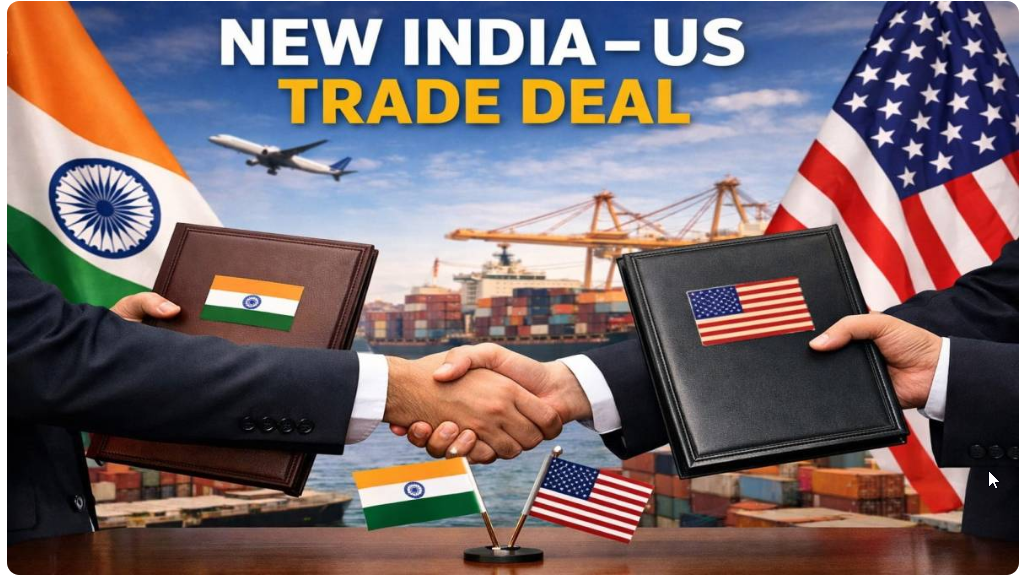
So, what exactly is this deal? Is it a strategic masterstroke that cracks open the $30 trillion American market, or is it a hasty concession made under the duress of punitive tariffs and geopolitical isolation? Having analyzed the official statements, the intense diplomatic history, and the fine print regarding soybeans and software, here is the ground truth regarding the India-US trade deal as it stands in February 2026.
The Genesis: From February 2025 to the Tariff War
To understand the “why” of February 2026, you have to look at February 2025. According to Indian Ambassador Vinay Kwatra, the current agreement is not a spontaneous decision but the culmination of a mandate set a year prior. When PM Modi visited the US, the two leaders gave two clear directives: negotiate a multi-sector Bilateral Trade Agreement (BTA) and target “Mission 500” —taking bilateral trade to $500 billion .
However, the road to that mission was mined. The sticking point wasn’t just almonds or apples; it was oil. Specifically, Russian oil. Following the conflict in Ukraine, the US adopted a hardline stance against nations facilitating Russian energy exports. India, the world’s third-largest oil importer, continued to snap up discounted Russian crude.
Washington’s response was severe. In July 2025, the US imposed 25% reciprocal tariffs on Indian goods. By August 2025, President Trump signed an executive order slapping an additional 25% tariff on India, citing its “indirect” imports of Russian oil. This double whammy resulted in a crippling 50% duty on Indian exports ranging from textiles to machinery . For Indian manufacturers competing with Vietnam (20% duty) and China (35% duty), the 50% wall was existential .
The interim deal, therefore, is not merely a trade facilitator; it is a damage-control mechanism to pull Indian exports back from the brink of being priced out of America entirely.
The Anatomy of the Deal: Tariffs, Tech, and a $500 Billion ‘Intention’
The framework announced on February 7 is technically an “interim” or “first tranche” agreement, a precursor to a wider BTA expected later in 2026. It is reciprocal in nature but distinctly asymmetric in its immediate impact.
What India Gets (Market Access & Tariff Relief)
The most immediate victory for New Delhi is the dismantling of the 50% tariff wall.
- Tariff Reduction: The US has agreed to lower duties on Indian goods to approximately 18%. This is down from the punitive 50% peak and lower than the 35% imposed on China .
- Zero Duty Entry: Several Indian exports will now enter the US at zero duty. This includes high-value sectors such as gems and diamonds, pharmaceutical products, and smartphones. Additionally, labour-intensive sectors like textiles, garments, leather, footwear, plastics, and organic chemicals have received a significant boost .
What the US Gets (Market Access & Energy)
In exchange, India has opened its wallet and its market—but with carefully placed speed breakers.
- Mission 500 – The $500 Billion Question: India has stated it “intends” to purchase $500 billion in American goods over five years. This includes energy products (coal and LNG), aircraft, defense technology, and precious metals. The shift from “commits” to “intends” in the White House factsheet was a major diplomatic correction, signaling that these are non-binding commercial targets, not contractual obligations .
- Industrial and Agricultural Tariffs: India has agreed to slash or eliminate duties on a range of American industrial products and a specific list of food items. This includes soybean oil, dried distillers’ grains (used for feed), tree nuts, apples (via tariff rate quotas), and wine/spirits .
The Agricultural Debate: Are Indian Farmers ‘Saved’ or ‘Sold Out’?
This is the emotional core of the domestic opposition. Is the deal a death sentence for the Indian farmer, or has the government successfully built a fortress around the 500-million strong agrarian workforce?
The Government’s Defense (The Exclusion List)
Commerce Minister Piyush Goyal and Commerce Secretary Rajesh Agrawal have been unequivocal: “We have not included any item where any Indian farmer will be hurt.” .
The government argues that the “sensitive list” remains completely sealed. There are zero tariff concessions on:
- Dairy products (milk, cheese, butter)
- Meat and Poultry
- Cereals (wheat, rice, maize, millets)
- Oilseeds (soybean, mustard)
- Sugar and Ethanol
- Fruits (bananas, strawberries, citrus)
- Pulses (critically, references to “certain pulses” were removed from the final framework) .
Furthermore, Goyal explicitly stated that no Genetically Modified (GM) items will enter India through this deal. For items where some access was granted (like apples), the government insists on using Tariff Rate Quotas (TRQs) , meaning only a limited quantity at a reduced duty is allowed, preventing a flood of cheap imports .
The Opposition’s Counter (The Inclusion List)
Despite these assurances, critics remain unconvinced. The “Joint Farmers’ Front” and the Congress party point to the items that did make the cut. While staples are protected, commercial crops have been exposed.
India has agreed to lower duties on soybean oil and dried distillers’ grains (DDGS) . Critics argue that cheap US soybean oil will undercut domestic prices, affecting oilseed farmers. Additionally, the inclusion of apples, walnuts, and pistachios threatens horticulturists in states like Himachal Pradesh and Jammu & Kashmir .
Rahul Gandhi, speaking in Lok Sabha, framed this not just as an economic misstep but as a strategic surrender: “Our farmers have been left to the mercy of mechanized massive American farms.” .
The Verdict: The Indian farmer is partially protected, not fully insulated. The government has held the Line of Control on subsistence food security (wheat, rice, milk), but it has retreated on high-value cash crops and feedstock. For the average kisan growing wheat, nothing changes. For the walnut grower in Kashmir or the soybean farmer in Madhya Pradesh, the competitive landscape just got tougher.
The Hidden Heavyweight: Digital Trade and Data
While farmers and textile unions grab headlines, the most forward-looking—and perhaps controversial—aspect of the deal lies in the digital sphere.
The original White House factsheet contained aggressive language regarding India “removing its digital services taxes.” While the amended factsheet softened this to “committed to negotiating bilateral digital trade rules,” the direction of travel is clear .
Opposition leaders have seized on this. Rahul Gandhi alleged that the deal involves handing over India’s data assets: “We have handed out our data, given up control over digital trade rules, no data localization, free data flow to the USA, a limit on digital tax and no source code disclosure.” .
If true, this represents a philosophical shift. India has historically championed data localization (insisting that data generated by Indians be stored on servers in India). This deal appears to lean toward Cross-Border Data Flows, a key demand of Big Tech. By agreeing to negotiate on these terms, India is effectively trading its digital sovereignty ambitions for hardware access and tariff relief.
However, Ambassador Kwatra has painted this as an opportunity rather than a loss. He emphasizes cooperation on the “AI stack”—energy, infrastructure, and compute power—aiming to democratize technology under the “AI for All” mantra .
The Geopolitical Ratchet: Russian Oil and American Pressure
It is impossible to view this deal as purely commercial. It is a geopolitical transaction. The US didn’t just want India to buy more iPhones; it wanted India to stop fueling the Russian “war machine.”
The deal explicitly links trade normalization to energy diversification. While President Trump hailed the deal as a win for American coal and LNG exports, the executive order rescinding the 25% tariff came with a loaded gun: The tariffs could be reinstated immediately if the US Commerce Department determines that India has “directly or indirectly” resumed Russian oil imports .
India is walking a tightrope. Russia remains a trusted legacy partner and a source of cheap energy. However, being tagged with a 50% tariff in the US market is unsustainable. The compromise, as analysts suggest, is a gradual reduction in Russian procurement under the guise of “market diversification” rather than an abrupt halt .
This puts the deal on shaky ground. It is not a permanent peace treaty; it is a probationary period. If global oil prices spike and India veers back toward Moscow, the trade pact could unravel as quickly as it was signed.
The ‘Factsheet Fiasco’: A Test of Trust
No analysis of this deal is complete without addressing the diplomatic hiccup that occurred just 72 hours after the announcement. The White House released a factsheet claiming India had “committed” to $500 billion in purchases and had agreed to cut duties on “certain pulses.”
India denied this vehemently. Official sources stated that while India intends to buy more, it made no legally binding commitment, and pulses were never on the table .
By February 12, the White House amended its factsheet, scrubbing the contentious terms and aligning the language with India’s joint statement. The MEA called this a reflection of “shared understandings.” .
This incident reveals two truths:
- Domestic Politics Matter: The Modi government knew that binding commitments on pulses or binding import targets would cause a political firestorm in an election-sensitive year. They successfully pushed back.
- American Overreach: The initial “misrepresentation” suggests that the US administration believed it had extracted more than India was willing to give. It serves as a warning that the upcoming full BTA will see similar battles over wording and intent.
Impact: Winners, Losers, and the Long View
The Winners:
- Textile and Leather Exporters: Saved from the 50% abyss, they now have a 32% margin advantage over competitors .
- Gems & Jewellery and Pharma: Zero-duty access to the US market is a massive shot in the arm .
- US Coal and Gas Producers: Trump explicitly called this a “historic” win for American energy dominance .
The Losers:
- Domestic Oilseed Processors: Cheaper US soybean oil will pressure local crushing margins.
- Himachal Apple Growers: Limited, but present, competition from high-quality US apples.
- Indian IT Services?: While not immediate, if India concedes on digital tax and data localization, the $250 billion IT export sector may face new competitive pressures domestically.
The Uncertain:
- The $500 Billion Target: India currently exports more to the US than it imports. To hit $500 billion in total trade, India must import massively. This could flip the trade surplus, impacting current account balances .
Conclusion: A Calculated Pivot, Not a Capitulation
The 2026 India-US Interim Trade Deal is the economic equivalent of a high-stakes chess match. It is not a Free Trade Agreement in the classical sense; it is a reset button pushed after a year of punishing tariffs.
For the Indian farmer, the news is mixed but not apocalyptic. The government has successfully shielded the staples that feed the nation and the votes that decide elections. However, it has opened the door slightly on commercial agriculture, betting that the efficiency gains in exports (textiles, leather, pharma) will outweigh the marginal pain in niche horticulture.
For India’s strategic autonomy, the deal is a reality check. The link between Russian oil purchases and American tariff policy is now explicit. India has bought a temporary reprieve by promising to buy American energy, but the threat of snapback tariffs hangs over the relationship like a guillotine.
Ultimately, this deal is a reflection of the world in 2026—a world where trade is weaponized, supply chains are political, and even the closest of strategic partners must negotiate under the shadow of sanctions. The ink is barely dry on the framework, and already the battle has shifted to the legal text. By March 2026, we will know if this “shared understanding” holds or if the factsheet fiasco was a sign of deeper fractures to come.
Why Trump Is Interested in Iran — A 2026 Perspective – LearnXYZ

![[keyword]](https://learnxyz.in/wp-content/uploads/2026/03/चितकारा-यूनिवर्सिटी-ने-टैली-सॉल्यूशंस-के-संस्थापक-भरत-गोयनका-को.JPG)
![[keyword]](https://learnxyz.in/wp-content/uploads/2026/04/Nexdigm-was-again-selected-for-Everest-Groups-Global-PEAK-Matrix.png)