

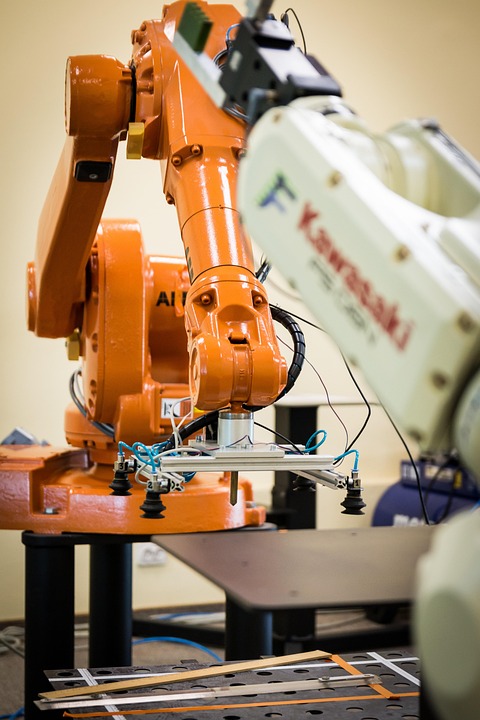
Navigating the Future-Forward & Provocative Realities of the 21st Century
We stand at the precipice of a transition so profound that it threatens to render our current definitions of “human,” “work,” and “society” obsolete. This is not a slow evolution; it is a seismic leap. To be future-forward is to acknowledge this shift; to be provocative is to demand we control it before it controls us.
1. The Death of Biological Determinism
For millennia, the human condition was defined by its limitations. We were born with a set of genes, lived a predetermined span, and succumbed to the frailty of the flesh. That era is ending. We are moving from a species shaped by natural selection to one shaped by intentional design.
CRISPR and Gene Editing: The ability to edit the human germline is no longer science fiction. While the medical community focuses on curing hereditary diseases, the provocative reality lies in “enhancement.” We are approaching a fork in the road where the wealthy can purchase cognitive and physical advantages for their offspring. This creates a terrifying prospect: a biological class divide that is written into our very DNA.
The End of Aging: Thinkers like David Sinclair and Aubrey de Grey argue that aging is a disease—a collection of cellular errors that can be repaired. If we “solve” death, or even extend life expectancy to 150 years, the societal ramifications are explosive. What happens to retirement? What happens to the flow of new ideas if the “old guard” never moves on? The future-forward perspective suggests that longevity is a human right, but the provocative question is whether the Earth can sustain a population that refuses to die.
2. Cognitive Decoupling: AI as the New Sovereign
Artificial Intelligence has moved past being a “tool” and is becoming a “collaborator.” However, the next phase is Cognitive Decoupling—where AI systems perform tasks that were once the exclusive domain of human consciousness, such as creativity, moral judgment, and strategic leadership.
The provocative truth is that we are building our own replacements. Generative AI is already hollowing out the middle class of intellectual labor. Writers, coders, and designers are facing an existential crisis. But looking further ahead, we must ask: What happens when the first AI holds a seat on a corporate board? Or when an AI algorithm provides a more “just” legal ruling than a human judge prone to fatigue and bias?
We are entering a period of Technological Unemployment, but also Ontological Displacement. If a machine can think, create, and empathize better than you, what is your purpose? The future-forward solution isn’t to fight the machine, but to merge with it. Brain-computer interfaces (BCIs) like Neuralink aim to close the bandwidth gap between human thought and digital processing. The provocative result? The first generation of “Post-Humans” who are permanently “online” within their own minds.
3. The Collapse of the Nation-State and the Rise of the Network State
The traditional nation-state is a relic of the industrial age, designed to manage physical borders and land-based resources. In a world of decentralized finance (DeFi), remote work, and digital identity, the “country” is becoming an inefficient middleman.
The provocative concept of the Network State, popularized by Balaji Srinivasan, suggests that we will see the emergence of highly aligned online communities that eventually crowd-fund land and gain diplomatic recognition. Why should your laws be determined by where you were born, rather than by the values you share with your global digital tribe?
This shift threatens the very tax base of modern governments. If the most productive citizens can move their capital into encrypted protocols and their physical presence to “startup cities,” the social contract of the 20th century will shatter. The future-forward view sees this as the ultimate liberation of the individual; the provocative reality is a world of extreme fragmentation and the loss of a shared public reality.
4. The Post-Scarcity Illusion and the Energy Paradox
We are told that technology leads to abundance. Lab-grown meat, vertical farming, and nuclear fusion promise a world where the basic needs of every human are met for pennies. This “Post-Scarcity” future is the ultimate goal of the future-forward movement.
However, the provocative counter-narrative is the Jevons Paradox: as technology makes a resource more efficient, we don’t use less of it; we use significantly more. Our hunger for compute power for AI and the metaverse is driving energy demands that outstrip our green transitions.
Furthermore, abundance creates its own psychological hell. Without struggle, where does meaning come from? If food, shelter, and entertainment are “free,” the human psyche—evolved for survival and competition—may descend into a crisis of nihilism. The future-forward challenge isn’t just surviving scarcity, but surviving the vacuum of plenty.
5. The Architecture of Truth in a Deepfake Reality
We are the last generation that will know what “real” looks like. As synthetic media becomes indistinguishable from reality, the concept of “evidence” dies. This isn’t just about politicians saying things they didn’t say; it’s about the erosion of a shared objective truth.
A provocative future-forward society must adopt Zero-Trust Architectures for information. Everything—from a video call with your mother to a news report—will need to be cryptographically verified on a blockchain. If it isn’t signed by a private key, it didn’t happen. We are moving back to an era of “word of mouth” and “trusted circles,” but on a global, digital scale. The provocation here is that we may lose the ability to have a functional democracy if we cannot even agree on the basic facts of a video recording.
6. Re-Wilding vs. Terraforming: The Planetary Choice
The future-forward movement is often split into two provocative camps regarding our planet. The Earth-Firsters advocate for radical re-wilding—using technology to shrink the human footprint, abandoning cities, and letting nature reclaim the majority of the planet. The Expansionists, led by figures like Elon Musk, argue that Earth is a “single-point-of-failure” and that our moral imperative is to become a multi-planetary species.
The provocative question is: Is it ethical to spend trillions colonizing a dead rock like Mars when our own cradle is burning? Or is it the ultimate act of cowardice to stay here and risk the extinction of consciousness itself? The future-forward path likely involves both: a high-tech, “invisible” presence on Earth and a bold, industrial presence in the stars.
Conclusion: The Responsibility of the Architect
The future is not something that happens to us; it is something we build. Being future-forward means looking at these looming disruptions—AI, biotech, decentralization, and post-scarcity—not with fear, but with a designer’s eye. Being provocative means having the courage to ask the “unthinkable” questions before they become “unsolvable” problems.
We are the first generation in history that has the tools to rewrite the human script. We can end disease, we can expand our intelligence, and we can reach the stars. But we can also create a digital panopticon, a biological caste system, and a world where “truth” is a luxury for the elite. The provocation I leave you with is this: In a world where everything is possible, who do you choose to be? The era of the passive observer is over. Welcome to the era of the architect.
Frequently Asked Questions
1. Does “future-forward” mean we should embrace all new technology without question?
Absolutely not. Being future-forward means being proactive in understanding technology’s trajectory. It involves rigorous ethical questioning and “red-teaming” potential outcomes. It is about steering the ship, not just letting the current take us wherever it wants.
2. How will AI actually change the job market in the next 10 years?
The most provocative (and likely) outcome is the “Barbell Effect.” High-level strategic roles and low-level manual/empathy-based roles will remain, while the “middle-skill” cognitive work (basic accounting, entry-level law, routine coding) will be largely automated. We will need to redefine “work” and likely decouple it from “survival” via mechanisms like Universal Basic Income.
3. Is the “Network State” actually legal?
Currently, no. But law is downstream of power and culture. As digital communities gain more economic might than small countries, they will negotiate for special economic zones or “charter cities.” Over time, the definition of sovereignty will likely evolve to include these digital-first entities.
4. What is the biggest risk of the transhumanist movement?
The “Speciation Event.” If genetic and technological enhancements are only available to the ultra-rich, we risk splitting the human race into two different species: the “Enhanced” and the “Natural.” This would be a social conflict far more intense than any racial or class struggle in history.
5. How can an individual stay “provocative” in their own life?
Challenge your own assumptions. If you find yourself following a traditional path (9-5 job, standard investment, local news consumption) without questioning why, you are living in the past. To be provocative is to experiment: use AI to 10x your output, explore decentralized finance, and constantly learn skills that are “future-proof” like emotional intelligence and complex problem-solving.